Dream Interpretation: What Your Dreams Are Really Trying to Tell You
Tommy Sherma
8/21/2026
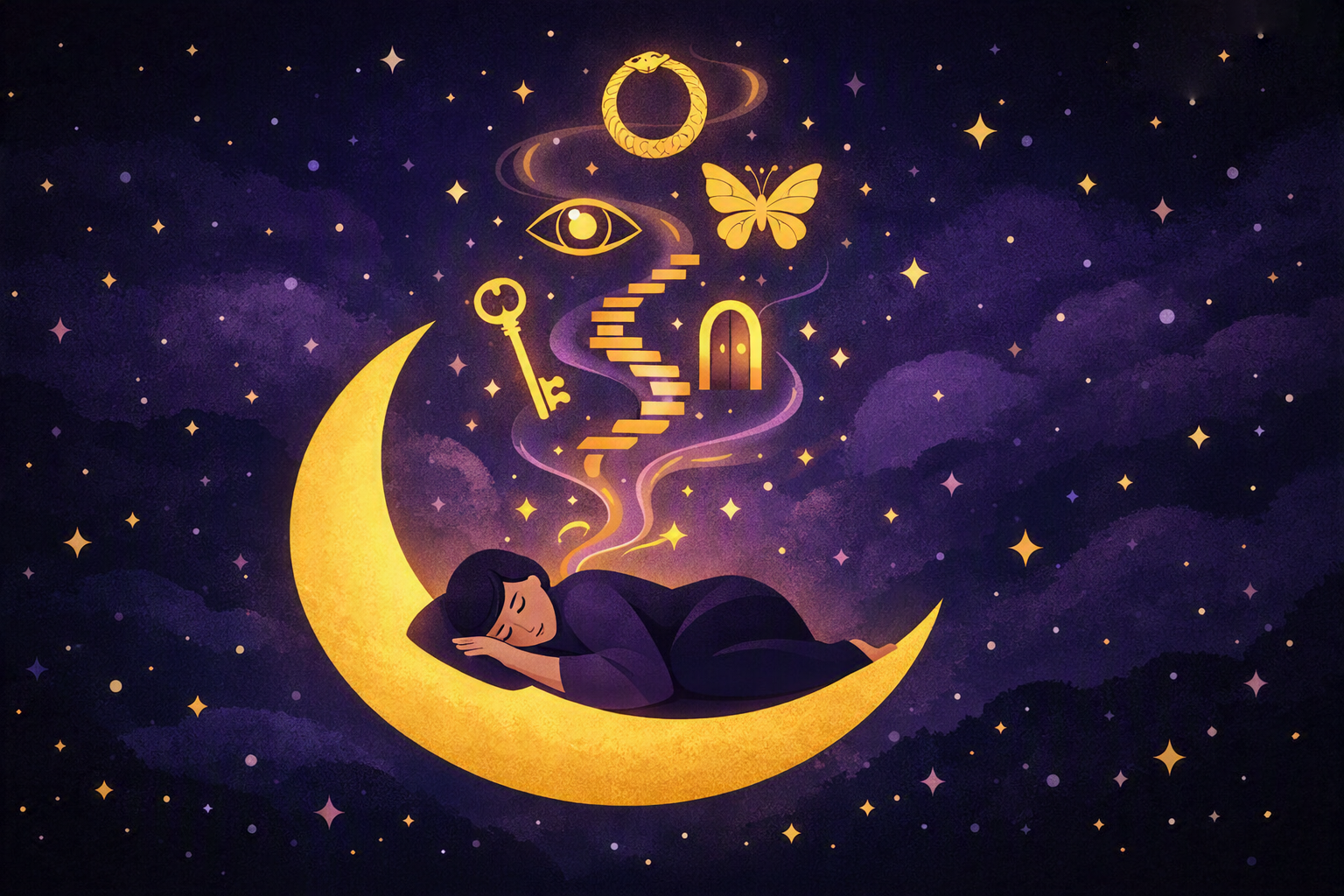
Common dream meanings are symbolic messages your mind uses to process emotions, memories, and unresolved conflicts. For thousands of years, from Egyptian dream temples to Jung's analytical psychology, these nighttime visions have been treated as guidance from a deeper layer of the mind. This guide covers common dream symbols and a step-by-step method for interpreting your own dreams—or you can skip ahead to a personalized AI dream interpretation.
Why Do We Dream? The Main Theories
Scientists still debate exactly why we dream, but the leading theories all point in a similar direction:
- Memory consolidation — your brain replays the day's experiences, deciding what to keep and what to discard. Dreams may be the "preview window" of this filing process.
- Emotional processing — dreams let you rehearse fears and desires in a safe simulation. This is why anxiety often shows up disguised as a chase or an exam you didn't study for.
- Threat rehearsal — the "threat simulation theory" argues dreams evolved as a nightly training ground for dangers, which is why being chased is one of the most universal dreams on Earth.
- The unconscious speaking — Jung's view: the dreaming mind communicates in symbols, compensating for whatever your waking self refuses to see.
Notice something important: none of these theories treat dreams as prophecy. They treat dreams as information — a nightly status report from parts of yourself you don't normally hear from.
The 5 Most Common Dreams and What They Mean
Dream researchers have surveyed thousands of dreamers across cultures, and the same themes appear everywhere. Here are the big five — and the standard interpretations.
1. Falling
The sudden jerk awake mid-fall — called a hypnic jerk — is neurological. But recurring falling dreams usually point to something else: loss of control or support in waking life. A job that feels unstable, a relationship shifting under your feet, a plan that collapsed.
Ask yourself: Where in my life do I feel like the ground is giving way?
2. Being Chased
The most common dream theme worldwide. The pursuer is almost never a literal person — it's the thing you're avoiding: a conversation, a decision, an emotion you've locked in a room. Notice that in most chase dreams, you never actually get caught. The fear is of the pursuit, not the outcome. For a full breakdown of the chase dream — who's pursuing you and how to stop running — see our guide to dreams about being chased.
Ask yourself: What am I running from while I'm awake?
3. Teeth Falling Out
One of the most-searched dream topics on the internet — and one of the oldest, recorded in ancient Greek dream books. Standard readings: anxiety about appearance, communication, or powerlessness. Teeth are how you present yourself, speak, and bite. Losing them in a dream often surfaces when you feel unheard, embarrassed, or losing face in some area of life.
Ask yourself: Where do I feel exposed or not taken seriously?
4. Flying
The good news dream — and it comes in two flavors. Effortless flying is classically read as freedom, rising above a problem, or new perspective. Struggling to fly (flapping hard, gaining only a few feet) tends to mirror a goal you're reaching for but feel blocked from — or a fear that your success won't hold.
Ask yourself: Am I soaring, or fighting to stay up? What does that say about my current climb?
5. Being Unprepared (The Exam Dream)
You're back in school, the final exam is starting, and you didn't even know there was a test. This one follows people well into their forties. It's the classic signature of performance anxiety and imposter feelings — the fear of being evaluated and found insufficient.
Ask yourself: Where am I afraid someone will discover I'm not ready?
How Dream Symbols Actually Work
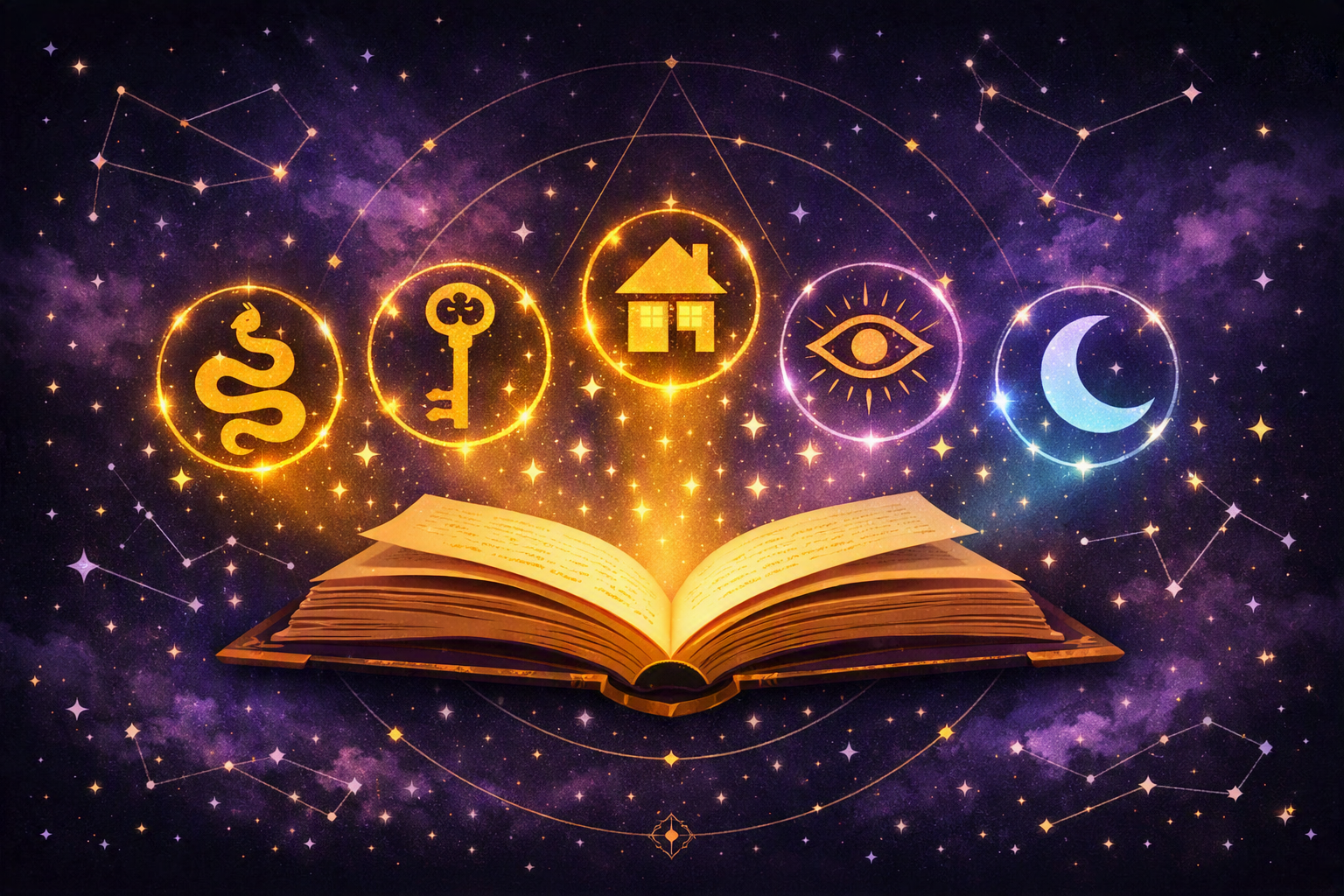
Here is the mistake most beginners make: opening a dream dictionary, looking up "snake," and accepting the answer like a horoscope. Symbols don't work that way.
The same image means different things to different people. A snake to a hiker bitten last summer, a reptile keeper, and someone raised on religious imagery carries three completely different emotional charges. Jung called this the difference between a sign (fixed meaning) and a symbol (living meaning that points beyond itself).
So use dictionaries as starting points, then personalize:
| Symbol | Common starting meaning | But ask yourself... |
|---|---|---|
| Water | Emotions; the state of the water often mirrors the state of the feelings | Is it calm, stormy, murky? How do I feel in it? |
| House | The self; rooms are aspects of your life | Which room was I in? Was it mine? |
| Snake | Transformation, hidden fear, instinct | What was my first feeling on seeing it? |
| Death | Endings that make room for beginnings — rarely literal | What phase of my life feels like it's ending? |
| Flying | Freedom, ambition, escape | Was it joyful or desperate? |
| Being lost | Uncertainty about direction | Who was I looking for? |
The rule: the symbol's meaning lives in your emotional reaction to it, not in the dictionary entry.
How to Interpret Your Own Dream: A 5-Step Method
Ready to decode one yourself? Work through this sequence — it takes about ten minutes with a journal.
- Write it down immediately. Dream memory evaporates within minutes of waking. Keep a notebook or note app at your bedside and capture the dream before checking your phone.
- Record the emotion first, plot second. How you felt during the dream is the most reliable interpretive key — more stable than imagery, which gets distorted as you wake.
- Circle the standout symbols. Not everything in a dream is meaningful. Usually one or two images carry the charge — the ones that feel "hot" when you reread them.
- Connect to the last 48 hours. Most dreams are woven from residue of the past two days. Ask where each symbol echoes something recent — a comment, a worry, an overheard phrase.
- Ask the closing question. End every interpretation with: "What is this dream asking me to pay attention to?" You don't need a verdict — a direction is enough.
Repeat this for two weeks and you'll notice your dreams becoming longer, clearer, and more memorable — attention is the amplifier.
Dreams, Tarot, and Astrology: One System, Three Languages
Here's something experienced practitioners know: dream work rarely lives alone. Dreams show you what's moving in the dark; other symbolic systems help you act on it in daylight.
Tarot is the natural companion. A dream tells you what surfaced; a tarot spread helps you interrogate what to do about it. Many readers draw one card for a vivid dream and let the card "answer" it. If you're new to cards, our beginner's guide on how to read tarot cards covers the structure from zero.
Astrology explains why certain themes repeat for you specifically. People with heavy Scorpio placements report more transformation-and-crisis dreams; lunar transits reliably spike dream recall. Understanding your chart gives your recurring dreams a context — start with our guide on how to read a birth chart, then track your dreams against the lunar cycle with a daily horoscope to spot the correlation in your own life.
Used together, they form a complete loop: dream reveals, tarot questions, astrology contextualizes.

Final Thoughts
Your dreams are not noise. Every night, your mind edits the day's raw footage into a private screening — and the director's commentary is written in a language of falling, flying, and teeth.
You already know the alphabet. Tonight, keep a notebook by the bed, capture the first dream you remember, and run it through the five steps. Or let an AI dream decoder walk you through it and translate the message while it's still vivid.
Either way — the dream you had last night is still trying to reach you. Decode it tonight →