How to Read a Birth Chart: The Complete Beginner's Guide
Tommy Sherma
8/18/2026
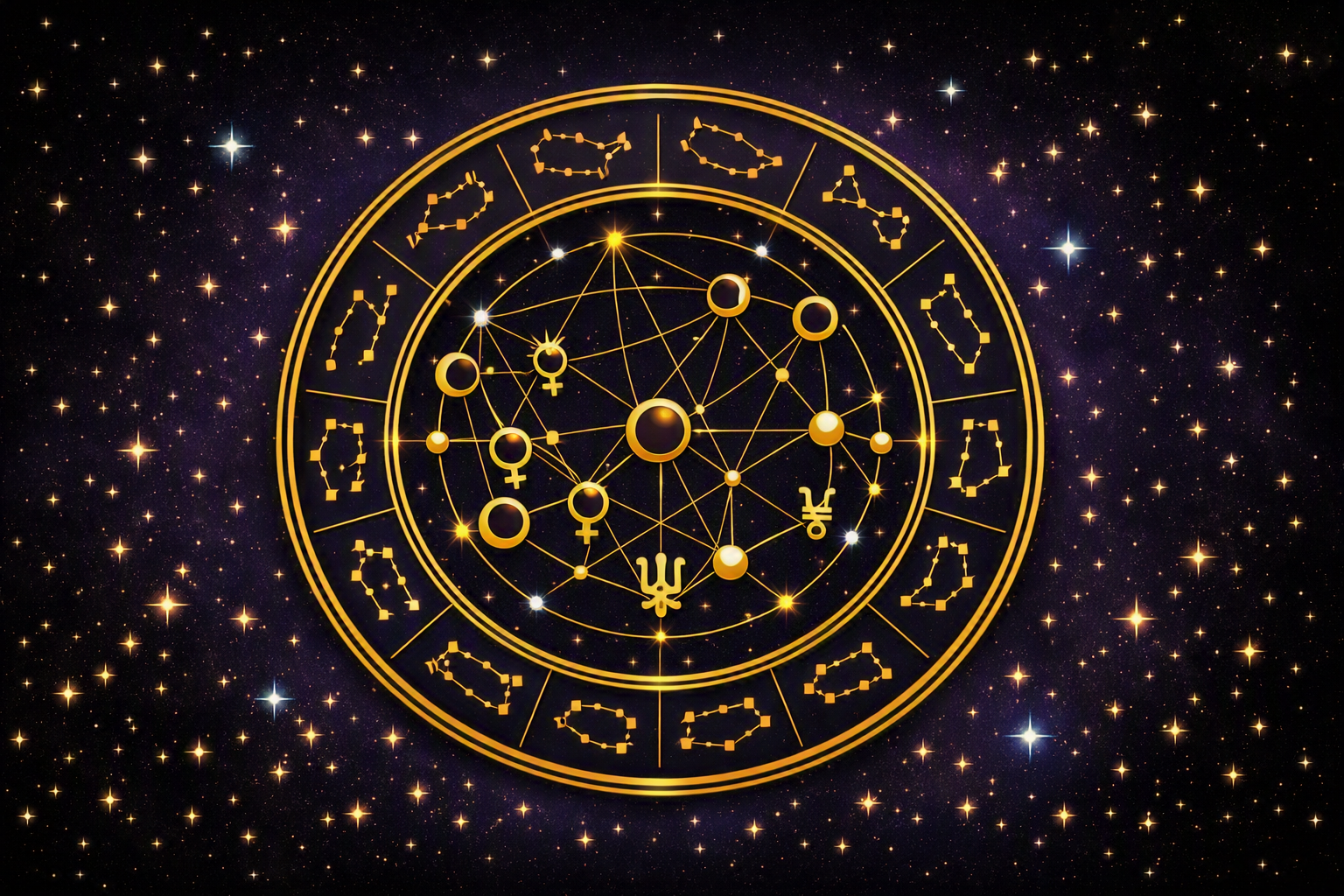
To read a birth chart, you interpret the sun, moon, planets, and angles at your exact birth time. Your sun sign is just one piece of this cosmic map, which also includes the Big Three, the 12 houses, and planetary aspects. Even with no prior astrology knowledge, you can learn to decode these placements and see the full picture of who you are.
What Is a Birth Chart?
A birth chart (also called a natal chart) is a snapshot of where the Sun, Moon, and every planet were positioned in the sky at the precise date, time, and place you were born. Astrologers treat it as your cosmic fingerprint — no two people (unless born at the same minute in the same city) share the same chart.
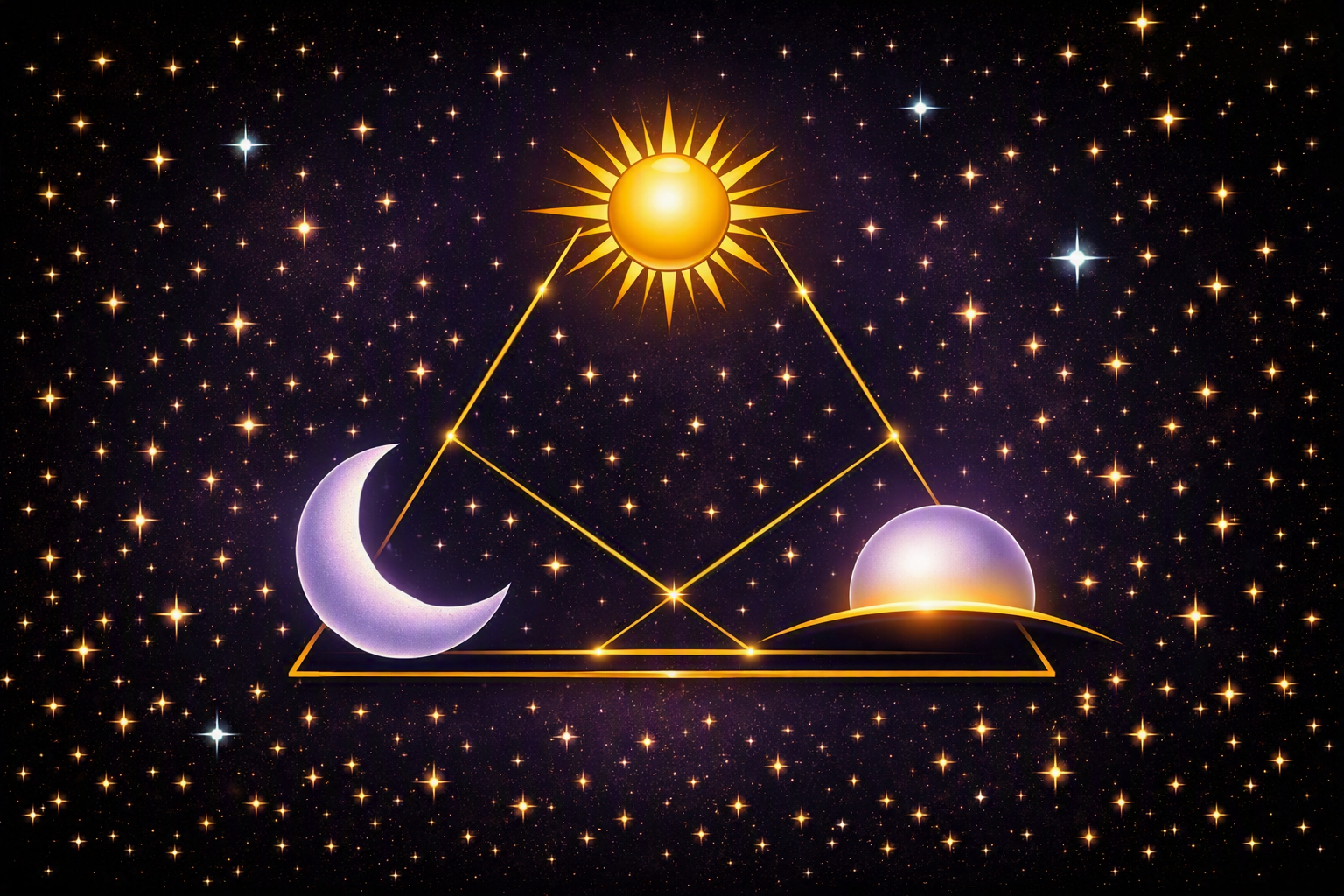
To cast one, you need three things:
- Your birth date — determines planet positions by sign
- Your birth time — determines your rising sign and house placements (it changes roughly every two hours, so accuracy matters)
- Your birthplace — determines the horizon line that anchors the whole chart
You can generate a complete, personalized interpretation in minutes with a free natal chart reading — but first, let's learn what you are actually looking at.
The Big Three: Sun, Moon, and Rising
When astrologers say "the Big Three," they mean the three placements that carry the most weight in your chart:
| Placement | What it rules | In plain words |
|---|---|---|
| ☀️ Sun sign | Core identity, ego, life purpose | Who you are at your center |
| 🌙 Moon sign | Emotions, instincts, inner needs | How you feel and process |
| ↑ Rising sign | Outward persona, first impressions | How the world sees you |
Most people only know their sun sign — the one from magazine horoscopes. But if you have always felt "off" about your sign, the explanation is usually in your Moon or Rising. Someone with a Capricorn sun and a Pisces moon will experience life very differently from a textbook Capricorn.
Quick tip: your rising sign also sets the starting point of all 12 houses, which brings us to the next layer.
The 12 Houses: The Map of Your Life
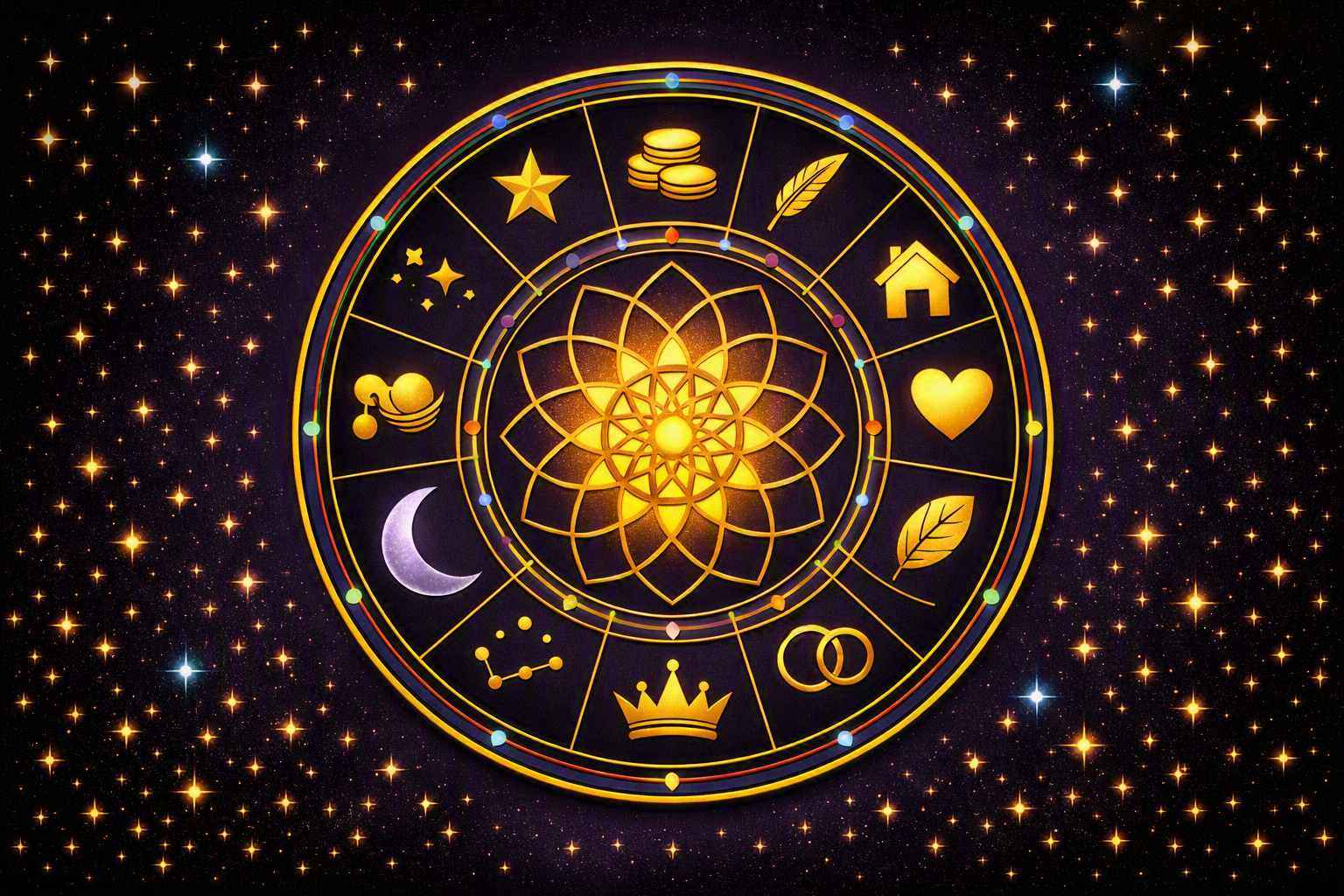
If planets are the actors, the houses are the stage. Each of the 12 houses governs a domain of life:
- 1st house — Self, identity, how you present to the world
- 2nd house — Money, values, material security
- 3rd house — Communication, siblings, learning
- 4th house — Home, family, emotional roots
- 5th house — Creativity, romance, self-expression
- 6th house — Health, routines, daily work
- 7th house — Partnerships, marriage, contracts
- 8th house — Transformation, intimacy, shared resources
- 9th house — Travel, philosophy, higher learning
- 10th house — Career, reputation, public life
- 11th house — Friendships, community, long-term dreams
- 12th house — Subconscious, healing, hidden strengths
A planet sitting in a house "activates" that life domain. And before you ask — an empty house does not mean an empty life. It simply means that area runs quietly in the background rather than demanding constant attention.
The Planets: The Actors in Your Story
Each planet represents a different drive or function of your personality:
- Mercury — how you think, speak, and process information
- Venus — how you love, what you value, your aesthetic
- Mars — your drive, ambition, and how you handle conflict
- Jupiter — where you find luck, growth, and expansion
- Saturn — your lessons, limits, and long-term discipline
- Uranus, Neptune, Pluto — generational forces: innovation, dreams, and deep transformation
The sign a planet is in shows how it behaves; the house shows where it plays out. Venus in Scorpio in the 7th house, for example, suggests an intense, all-or-nothing approach to partnership.
Aspects: How Your Planets Talk to Each Other
Aspects are the angles between planets — and they are what makes a chart move. The five major ones:
- Conjunction (0°) — planets fuse into one amplified force
- Trine (120°) — effortless harmony, natural talent
- Sextile (60°) — opportunity that rewards a small push
- Square (90°) — tension and friction that force growth
- Opposition (180°) — a push–pull between two poles seeking balance
Beginners often fear squares and oppositions, but in practice they are the engine of achievement. Trines make life pleasant; squares make you become someone.
Birth Chart vs. Daily Horoscope: What's the Difference?
A daily horoscope divides the entire world into twelve sun signs — it is weather forecasting for your sign. A natal chart, by contrast, is the unique territory map of you. The two work together: your chart is the landscape, transits are the weather moving over it.
If you want both layers working together, read our guide to daily horoscopes and cosmic forecasting, then check today's energy with a personalized daily horoscope that reads transits against your actual chart — not just your sun sign.
Beyond the Stars: Pairing Your Chart with Tarot and Personality Tests
Astrology is one lens, not the only one. Many people cross-reference their natal chart with other self-knowledge tools and find the picture sharpens:
- Tarot reads the energy of the present moment — your choices, blocks, and next steps. If your chart shows the terrain, tarot is the flashlight. Start with our beginner's guide on how to read tarot cards, or go straight to a free tarot reading.
- Personality testing maps your cognitive wiring. Comparing your MBTI personality type with your Big Three often reveals striking overlaps — an INFJ with a Pisces moon, for instance. You can take the full personality test and see for yourself.
Used together, they give you a fuller self-portrait than any single system.
How to Get Your Free Birth Chart Reading
Reading a chart manually takes astrologers years to master. The faster path: let AI do the astronomy, then walk you through the interpretation.
With a free natal chart reading you enter your birth date, time, and place, and receive a personalized analysis covering your Big Three, house placements, key aspects, and current transits — written in plain language, in your language.
Final Thoughts
Your birth chart is not a verdict — it is a vocabulary for understanding yourself. The Big Three tells you who you are, the houses show where life happens, the planets name your drives, and the aspects explain how it all interacts.
The sky the moment you were born has been waiting for you to read it. Start with your free natal chart reading →
See also: Beginner's guide to birth charts
Try It Yourself
Generate your full birth chart free — sun, moon, rising sign and all planet placements.
Try It Free →