Horoscope Guide: How to Read Your Daily Cosmic Forecast
Tommy Sherma
8/6/2026
A daily horoscope is a snapshot of current planetary positions and how they interact with your unique birth chart, offering guidance rather than a fixed prediction. It reflects the cosmic weather of the moment, which you can read with intention to support real decisions. This horoscope guide explains how to interpret that forecast and connect it to reflective practices like tarot.
What a Horoscope Really Tells You
A daily horoscope is a short interpretation of how the current positions of the Sun, Moon, and planets interact with your zodiac sign. Astrologers calculate these "transits" against the sky at the moment you were born, then translate the geometry into language you can use.
What it is not is a fixed destiny. Think of it as a weather report for your inner world. A difficult aspect between Mercury and Saturn might signal a morning of slow, serious conversations; a flowing Venus-Jupiter trine might hint at warmth arriving in the afternoon. The value lies in reading the tone of the day, not in waiting for a specific event to happen.
The Three Layers Behind Every Forecast
- Your Sun sign — the familiar zodiac sign most people know. It describes your core identity and the lens through which you meet the world.
- Current transits — where the planets are right now, and how those positions aspect your natal chart.
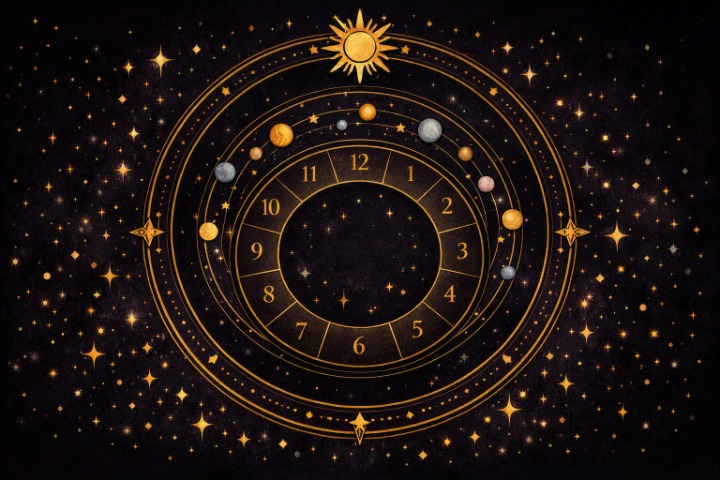
- The houses — twelve life areas (love, career, home, health, and so on) that show where the cosmic energy is likely to show up.
When a forecast mentions "Venus entering your tenth house," it's pointing at a specific intersection: the planet of connection and value moving through the zone of public life and ambition. The daily horoscope compresses all of this into a paragraph. Understanding the layers helps you read between the lines.
How to Read Your Daily Horoscope with Intention
A horoscope becomes genuinely useful when you stop skimming and start reflecting. Try this simple rhythm:
- Read it in the morning, before the day fills up. Give yourself a quiet minute to absorb the tone.
- Note the single sentence that resonates. Not the whole forecast — just the line that stirs something. That's where the day's signal is for you.
- Translate it into one action. If the forecast hints at tension in communication, your action might be to listen twice before replying. If it speaks of warmth in relationships, your action might be to reach out to someone you've been meaning to call.
The goal is to move from passive reading to active participation. The cosmos offers weather; you choose how to dress for it.
Avoiding the Two Common Traps
The first trap is fatalism — treating a forecast as a verdict. "Mercury retrograde means everything will go wrong" flattens a nuanced cycle into superstition. Retrogrades are times for review, revision, and return, not disaster.
The second trap is vagueness — reading the forecast and immediately forgetting it. If the guidance doesn't touch a real choice in your day, it slips away. Pairing the horoscope with a short reflective practice keeps it grounded. Many readers find that drawing a single tarot card alongside the morning forecast creates exactly that anchor — the card gives a visual focus, and the horoscope gives the context. You can explore that combination further in our complete tarot guide.
The Twelve Signs at a Glance
Each zodiac sign responds to the daily transits in its own language. Here's a quick orientation:
- Aries — action, initiative, courage. Your forecast often speaks of starts and momentum.
- Taurus — steadiness, value, sensuality. Watch for themes of patience and what you truly worth.
- Gemini — curiosity, communication, movement. Your day often turns on conversations and ideas.
- Cancer — feeling, home, memory. Emotional weather tends to lead your forecast.
- Leo — expression, warmth, creativity. Look for themes of visibility and recognition.
- Virgo — refinement, service, detail. Your guidance often points to small adjustments that matter.
- Libra — balance, relationship, beauty. The day usually turns on partnership and fairness.
- Scorpio — depth, transformation, truth. Watch for undercurrents and hidden meanings.
- Sagittarius — meaning, adventure, belief. Your forecast often speaks of expansion and horizon.
- Capricorn — structure, ambition, mastery. Look for themes of responsibility and long game.
- Aquarius — vision, community, originality. Your guidance often points to the collective and the future.
- Pisces — intuition, compassion, dreams. Emotional and symbolic weather tends to lead.
Knowing the sign's core keyword helps you read any forecast with more texture, because you'll instinctively sense why a particular transit hits a particular sign harder. For each sign's dates, elements, and traits in one place, start with our zodiac signs guide.
Reading Beyond the Sun Sign
Most daily forecasts are written for your Sun sign, but serious readers check two more points:
- Your Moon sign — your emotional baseline. A forecast that looks quiet for your Sun might be intense for your Moon. Our Moon sign guide explains how to find and interpret it.
- Your rising sign (ascendant) — the sign rising on the eastern horizon at your birth. The rising sign determines which house each transit lands in, so it's often the most accurate layer for daily timing. See the rising sign ascendant guide to work yours out.
If you know your birth time, you can read forecasts for all three and weave them together. If you don't, the Sun sign alone still offers real value — just treat it as one voice in a larger chorus.
Turning the Daily Forecast Into a Practice
A horoscope is most powerful when it becomes a habit rather than an occasional glance. Try anchoring it to a ritual you already have — your morning coffee, your commute, the first quiet minute after you sit down at your desk.
Then, once a week, look back. Read the past seven forecasts and notice which ones landed. Patterns emerge: certain transits consistently show up as real shifts in your mood or circumstances. Over a few months, you'll develop a personal vocabulary for the cosmic weather — you'll know what a Saturn square tends to feel like in your body, what a Venus return tends to open in your relationships.
This is where astrology stops being entertainment and starts becoming self-knowledge. The daily reading is the entry point; the long-term reflection is where the meaning compounds.
Connecting Horoscope and Tarot
Horoscope and tarot are two languages describing the same underlying idea: that there are patterns in life worth paying attention to, and that naming them gives you more choice in how to respond.
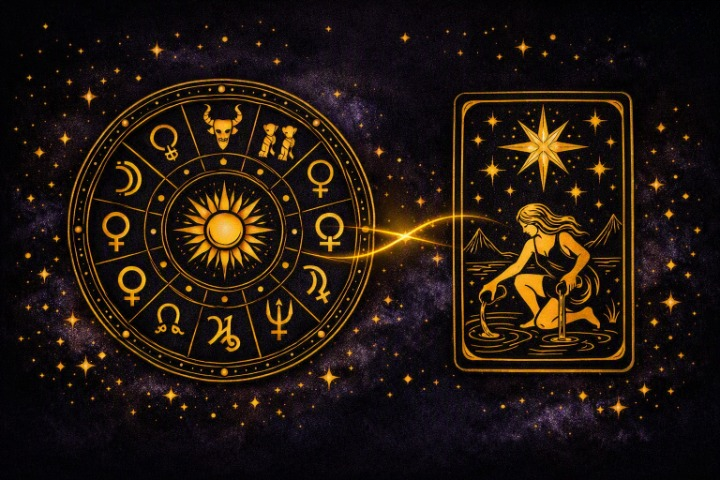
A practical rhythm many readers use is to read the morning horoscope for context, then draw a single tarot card for focus. The horoscope tells you the weather; the card tells you the question the day is asking you. Together, they turn an ordinary morning into a small, deliberate act of attention — and attention, more than any prediction, is what actually shapes the day you'll have.
Try It Yourself
Generate your full birth chart free — sun, moon, rising sign and all planet placements.
Try It Free →