Major Arcana Tarot Cards: Complete Guide to the 22 Cards & Their Meanings
Tommy Sherma
9/4/2026
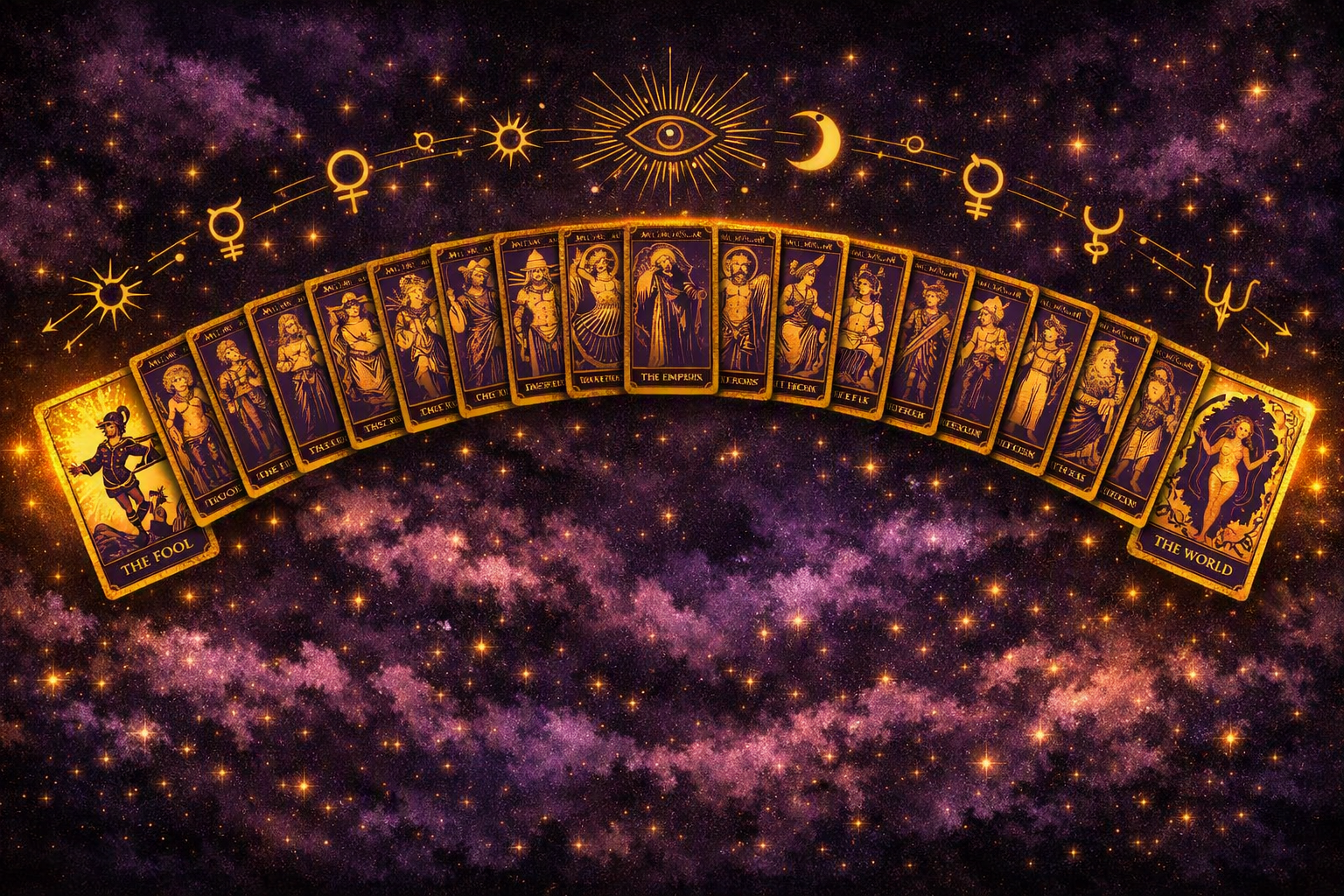
The Major Arcana is the heart of the tarot deck: 22 cards numbered 0 to 21 that trace the soul's journey from first spark to ultimate completion. Unlike the Minor Arcana's everyday money, arguments, and friendships, these cards speak in big themes of identity, purpose, transformation, and destiny. Each card is an archetype, a universal pattern appearing in myths, dreams, and your own story.
What Is the Major Arcana?
The name "arcana" comes from the Latin arcanum, meaning "secret" or "mystery." The Major Arcana are the Great Secrets; the Minor Arcana are the Lesser ones. In a reading, Major Arcana cards act as the headline of the story. They tell you which chapter of your life you are in, while the Minor Arcana fills in the details.
If the Minor Arcana is a photograph of your week, the Major Arcana is the novel your whole life is writing.
The Fool's Journey: The Story the 22 Cards Tell
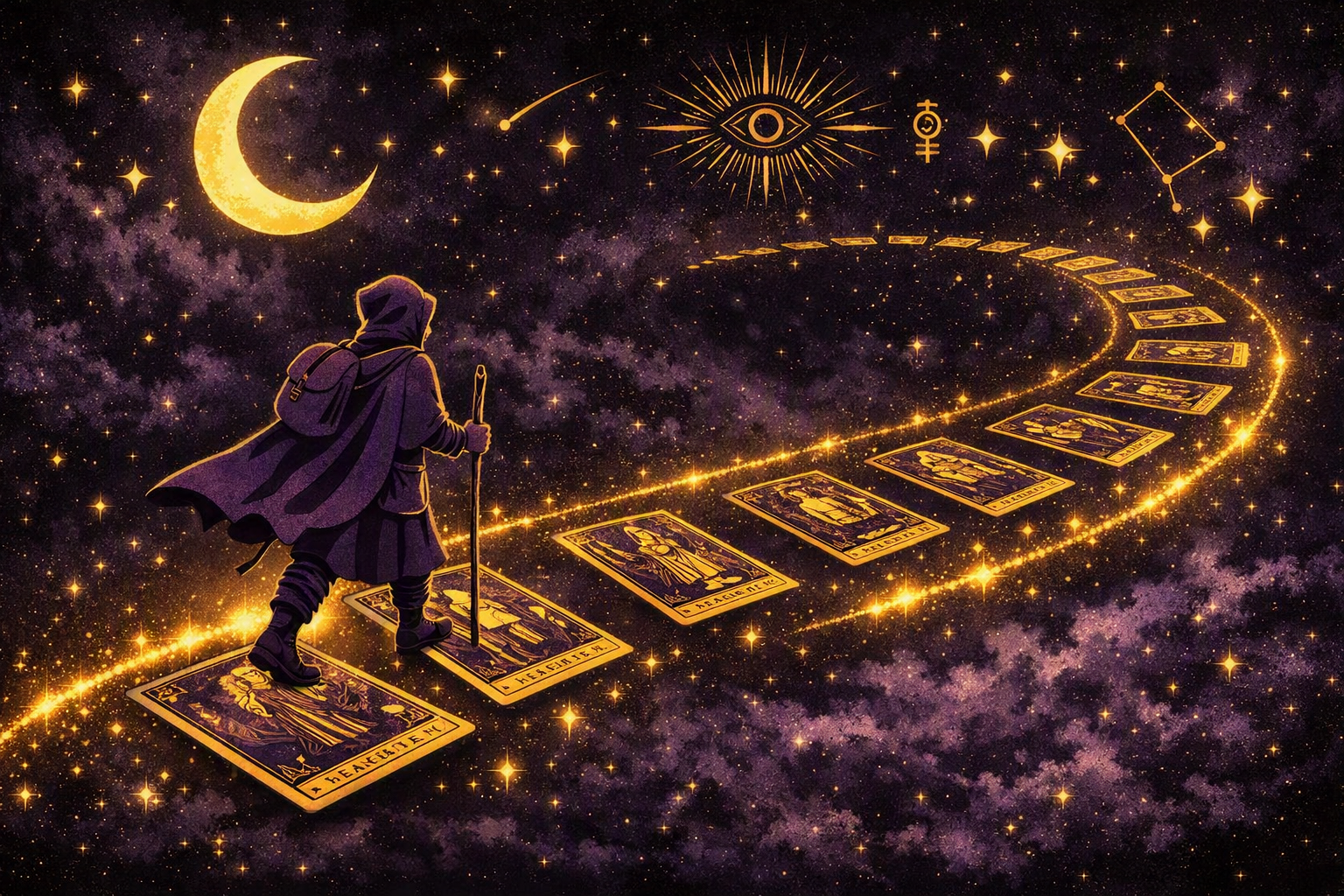
Read in order, the Major Arcana forms a continuous narrative called the Fool's Journey. The Fool (0) steps off a cliff with no plan and wanders through every human experience before arriving, transformed, at The World (21).
Act One — The Fool enters the world (0–V). The Fool meets The Magician, The High Priestess, The Empress, The Emperor, and The Hierophant: the forces of will, intuition, abundance, structure, and tradition that shape outer life.
Act Two — The Fool faces the self (VI–XIV). Through The Lovers, The Chariot, Strength, The Hermit, Wheel of Fortune, Justice, The Hanged Man, Death, and Temperance, the Fool confronts relationships, willpower, courage, solitude, fate, accountability, surrender, and rebirth.
Act Three — The Fool returns transformed (XV–XXI). The Devil and The Tower shatter the old self; The Star, The Moon, The Sun, Judgement, and The World rebuild it into something whole.
The 22 Cards, Card by Card
0 — The Fool. Beginnings, leap of faith, innocence. Upright: fresh starts, spontaneity, optimism. Reversed: recklessness, hesitation, naivety.
I — The Magician. Manifestation, skill, willpower. Upright: action, resourcefulness, "as above, so below." Reversed: manipulation, untapped talent, scattered energy.
II — The High Priestess. Intuition, mystery, the subconscious. Upright: inner knowing, stillness, hidden knowledge. Reversed: secrets, ignoring your gut, surface-level answers.
III — The Empress. Abundance, nurture, creativity. Upright: fertility, sensuality, care. Reversed: overgiving, creative block, neglect of self.
IV — The Emperor. Structure, authority, stability. Upright: leadership, order, discipline. Reversed: rigidity, control, burnout.
V — The Hierophant. Tradition, guidance, belief systems. Upright: mentorship, convention, spiritual community. Reversed: rebellion, dogma, forging your own path.
VI — The Lovers. Union, values, choice. Upright: partnership, alignment, heartfelt decisions. Reversed: imbalance, misalignment, difficult choices.
VII — The Chariot. Willpower, victory, determination. Upright: momentum, focus, triumph. Reversed: lack of direction, internal conflict, stalled progress.
VIII — Strength. Courage, compassion, patience. Upright: gentle power, resilience, mastery of instinct. Reversed: self-doubt, low energy, harshness.
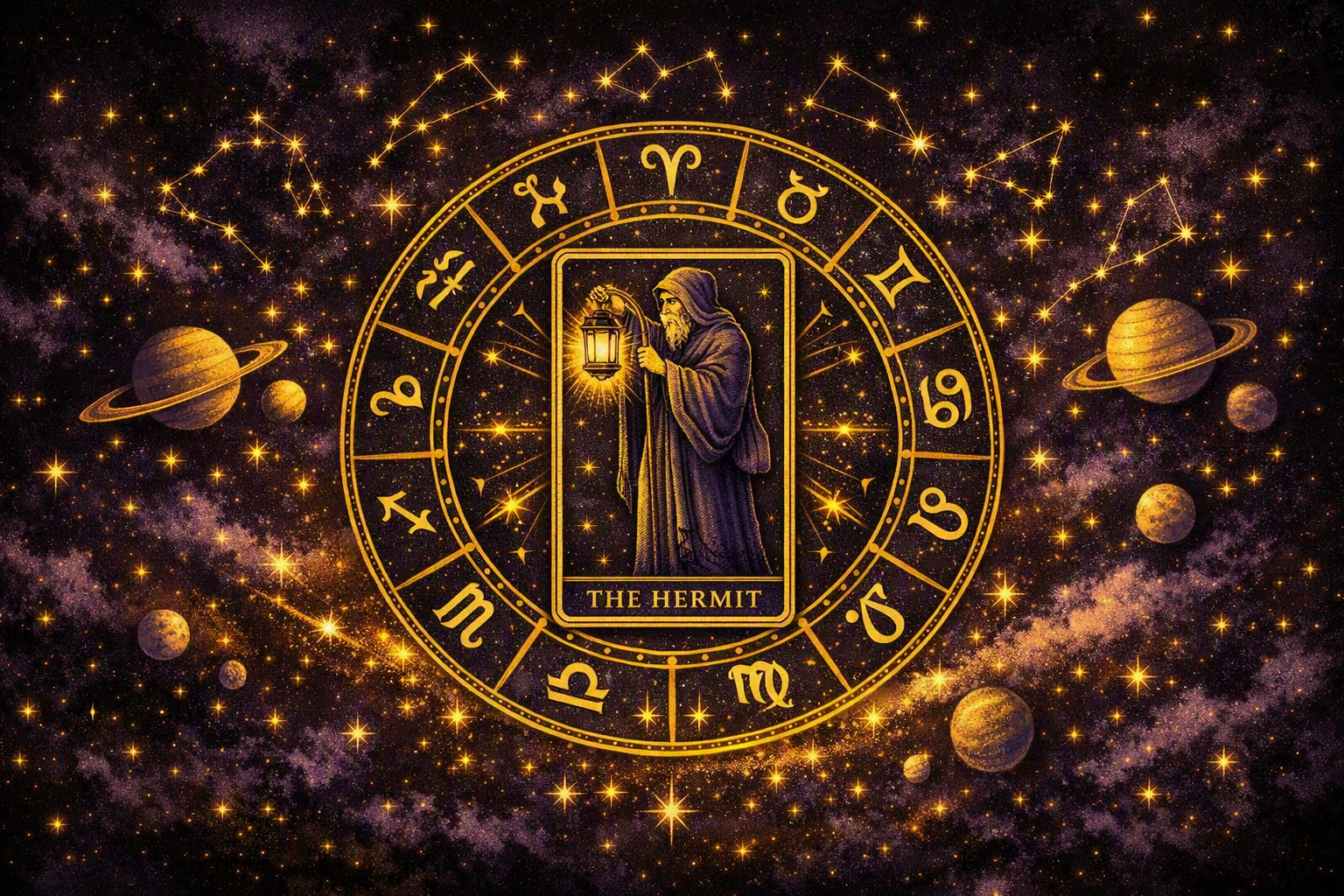
IX — The Hermit. Introspection, inner wisdom, solitude. Upright: reflection, seeking, soul-searching. Reversed: isolation, withdrawal, fear of being alone.
X — Wheel of Fortune. Cycles, destiny, turning points. Upright: change, luck, karmic timing. Reversed: resistance to change, bad luck, repeating patterns.
XI — Justice. Balance, truth, cause and effect. Upright: fairness, accountability, clear decisions. Reversed: injustice, dishonesty, avoidance of consequences.
XII — The Hanged Man. Surrender, new perspective, pause. Upright: letting go, seeing differently, sacred pause. Reversed: resistance, stalling, martyrdom.
XIII — Death. Transformation, endings, rebirth. Upright: deep change, closing chapters, renewal. Reversed: fear of change, holding on, stagnation.
XIV — Temperance. Balance, alchemy, moderation. Upright: harmony, blending opposites, patience. Reversed: excess, imbalance, impatience.
XV — The Devil. Shadow, attachment, temptation. Upright: bondage, obsession, unhealthy patterns. Reversed: liberation, breaking free, reclaiming power.
XVI — The Tower. Sudden upheaval, revelation, awakening. Upright: breakthrough, collapse of false structures, truth. Reversed: fear of change, delayed crisis, avoiding the fall.
XVII — The Star. Hope, healing, guidance. Upright: renewal, inspiration, faith in the future. Reversed: hopelessness, disconnection, doubting your path.
XVIII — The Moon. Illusion, intuition, the unconscious. Upright: dreams, uncertainty, facing the unknown. Reversed: clarity, releasing fear, truth surfacing.
XIX — The Sun. Joy, success, vitality. Upright: radiance, confidence, abundance. Reversed: temporary cloudiness, misplaced optimism, burnout.
XX — Judgement. Awakening, reckoning, calling. Upright: renewal, self-forgiveness, a higher call. Reversed: self-criticism, ignoring your calling, past guilt.
XXI — The World. Completion, wholeness, achievement. Upright: integration, mastery, a cycle closing. Reversed: unfinished business, lack of closure, fear of the finish line.
How the Major Arcana Shows Up in a Reading
When a Major Arcana card appears, it lifts the reading from daily detail to life theme. It asks: what chapter am I in? For example, The Lovers in a career spread rarely means romance — it means choosing work aligned with your values.
To see how Major cards interact across a full spread, study the Celtic Cross tarot spread, where ten positions give each Major Arcana card a specific role to play.
The Archetype Connection: Major Arcana, MBTI & the Enneagram
The Major Arcana are not random images — they are the same archetypes that personality systems describe. The Empress's nurturing abundance echoes a caregiver's energy; The Hermit's introspective solitude mirrors the inner world of a thinker; The Magician's mastery of tools looks a lot like a pragmatic problem-solver in action.
Read our MBTI personality test guide to see how the 16 types map onto archetypes, and the Enneagram guide to the 9 types to explore the core fears and desires that drive each card's shadow side. Together, the three systems give you a remarkably complete mirror of the psyche.
The Astrology of the Major Arcana
Twelve of the 22 cards carry zodiac rulers, and nearly all connect to planets. The Emperor is ruled by Aries, The Hierophant by Taurus, The Lovers by Gemini, Strength by Leo, The Hermit by Virgo, Justice by Libra, Death by Scorpio, Temperance by Sagittarius, The Devil by Capricorn, The Star by Aquarius, The Moon by Pisces — and The Chariot rides the Moon's chariot.
When a card and a sign align in your life, the resonance deepens. Learn to read the full celestial map in our beginner's guide to birth charts, where the Major Arcana can illuminate the archetypes at play in your natal chart.
How to Work With the Major Arcana
- Draw a daily Major card. Pull one card each morning, note the theme, and watch how it shows up.
- Journal the Fool's Journey. Read the 22 cards in order and write which stage you are living right now.
- Track repeat cards. A card that keeps returning is usually a lesson the soul refuses to skip.
- Work with the shadows. The Devil, The Tower, and Death are not "bad" cards — they are honest ones. Sit with them before dismissing them.
Major Arcana FAQ
What does the Major Arcana represent? The big themes of your life: identity, purpose, transformation, and destiny — as opposed to the everyday details of the Minor Arcana.
How many cards are in the Major Arcana? Twenty-two cards, numbered 0 (The Fool) through 21 (The World).
Is the Death card bad? No. Death almost never means physical death; it means transformation, an ending that clears space for something new.
What is the most powerful Major Arcana card? Power depends on context, but The World (completion), Judgement (awakening), and The Sun (radiance) are among the most positive — while The Tower delivers the most dramatic wake-up call.
What is the difference between Major and Minor Arcana? Major Arcana cards describe the overarching chapters of your life; Minor Arcana cards (Cups, Wands, Swords, Pentacles) describe the day-to-day events within those chapters.
Try It Yourself
The best way to learn the Major Arcana is to meet the cards face to face. Draw a card, sit with its image, and let it tell you where you are on your own Fool's Journey. The cards have been waiting for you to pick them up.