Major Arcana Tarot Cards Explained: Archetypes, Symbols, and Meanings
Tommy Sherma
9/18/2026
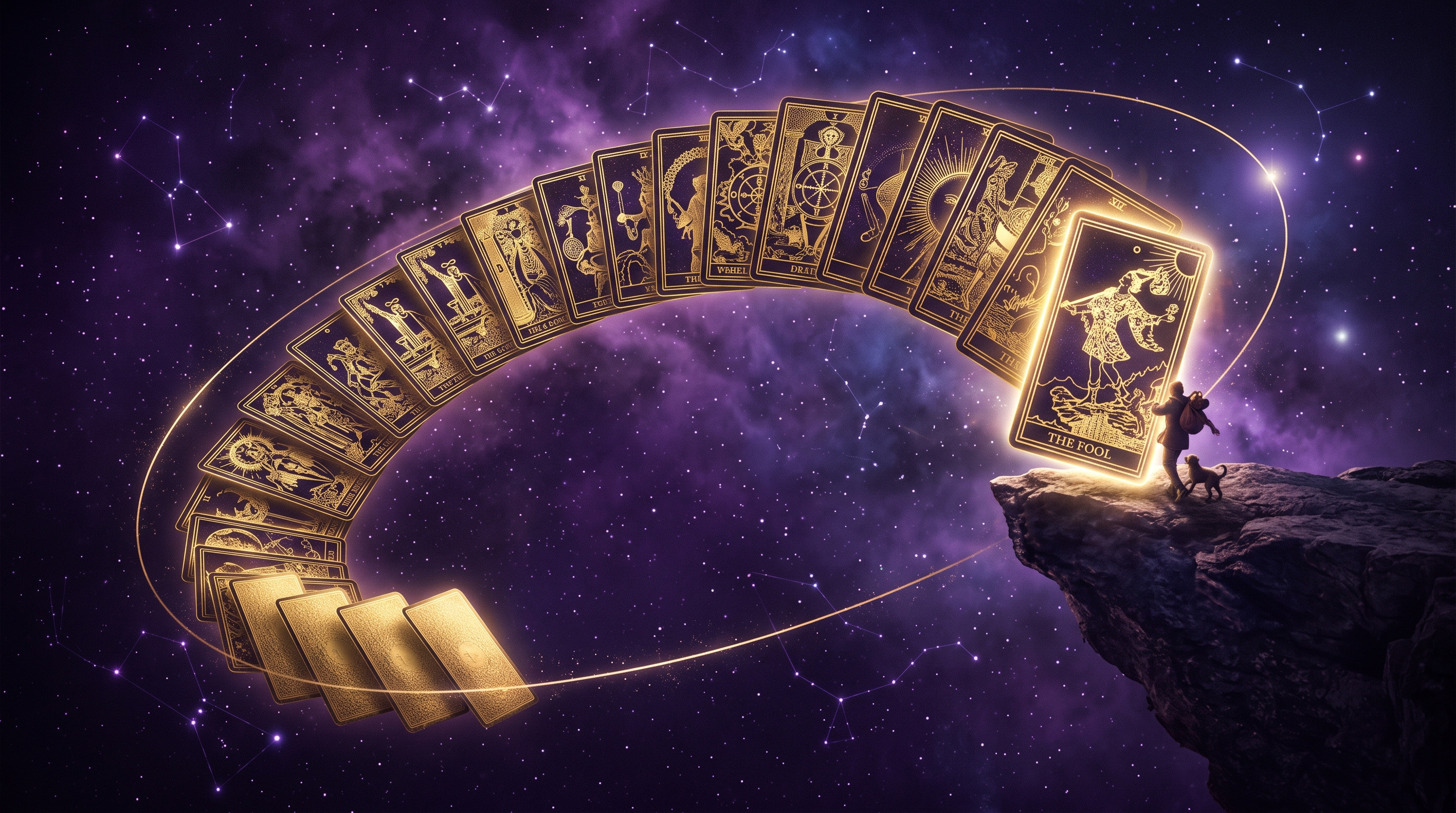
The Major Arcana works best as 11 mirrored pairs, not 22 separate cards, so a majors-heavy spread resolves into precise meaning once you know each card's opposite. The Fool and The World bracket the set, and every major only becomes usable when read against its mirror. That is why a feared card like Death acts as the hinge of a reading, not the threat inside it.
Why Major Arcana Tarot Cards Work as a Spiral, Not a Ladder
The Fool's Journey - Fool at 0, World at 21, the soul maturing card by card - is a decent memorization hook and a weak reading model. It implies a straight line with a finish. Readings do not finish. You meet the Emperor first as an external authority and later as your own capacity to set a limit; the Hermit shows up early as shyness and much later as deliberate retreat. The archetypes return at higher stakes, which is a spiral rather than a staircase.
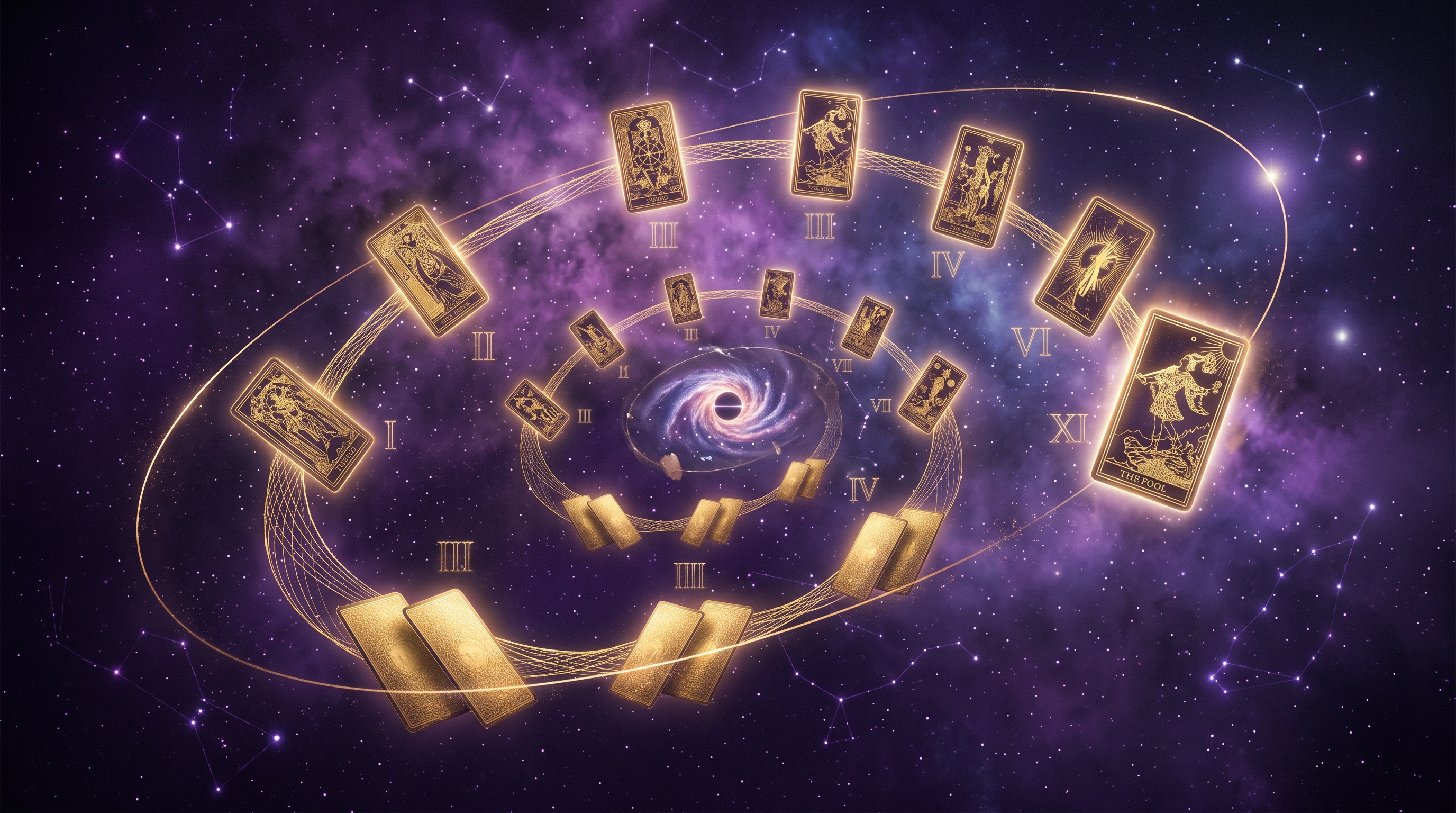
The mirror rule is what makes the spiral usable. Number the cards n; each one is answered by 21 - n.
| Mirror pair | The tension it names |
|---|---|
| 0 The Fool / 21 The World | Beginning before a plot exists / completion that closes a cycle |
| 1 The Magician / 20 Judgement | What you can do with what is on the table / being called to account for it |
| 2 The High Priestess / 19 The Sun | Knowledge you cannot explain / knowledge everyone can see |
| 3 The Empress / 18 The Moon | Growth that feeds you / imagery that misleads you |
| 4 The Emperor / 17 The Star | Structure you impose / hope you receive |
| 5 The Hierophant / 16 The Tower | Inherited doctrine / its collapse |
| 6 The Lovers / 15 The Devil | A bond you choose / a bond that chooses you |
| 7 The Chariot / 14 Temperance | Forcing the two horses / blending them slowly |
| 8 Strength / 13 Death | Taming what is alive / ending what is finished |
| 9 The Hermit / 12 The Hanged Man | Withdrawing to find your own light / suspending to change your angle |
| 10 Wheel of Fortune / 11 Justice | What happens to you / what you answer for |
Three ways to use the pairs. When two mirrors appear in one spread, treat them as a question and its counter-question: Empress plus Moon is rarely "abundance and confusion," it is usually "you are feeding something you have not examined." When one mirror appears alone, ask what its opposite would have said, then read the absence - Star without Moon is hope with the illusion already stripped out. When mirrors appear in sequence, read the handoff: Wheel then Justice is fate passing the bill to accountability, while Justice then Wheel is a ruling that turns out to be a cycle.
If you work with a Marseille deck, Strength and Justice swap numbers. The mirror rule survives the swap; only those two identities change. For the full card-by-card treatment, see the complete guide to all 22 Major Arcana cards.
The 22 Major Arcana Archetypes and Their Core Tarot Meanings
Grouped by register rather than by number. Each entry gives the symbol that anchors the image and the correction it makes to its own cliche.
The Fool Through the Chariot: The Outer Game (0-7)
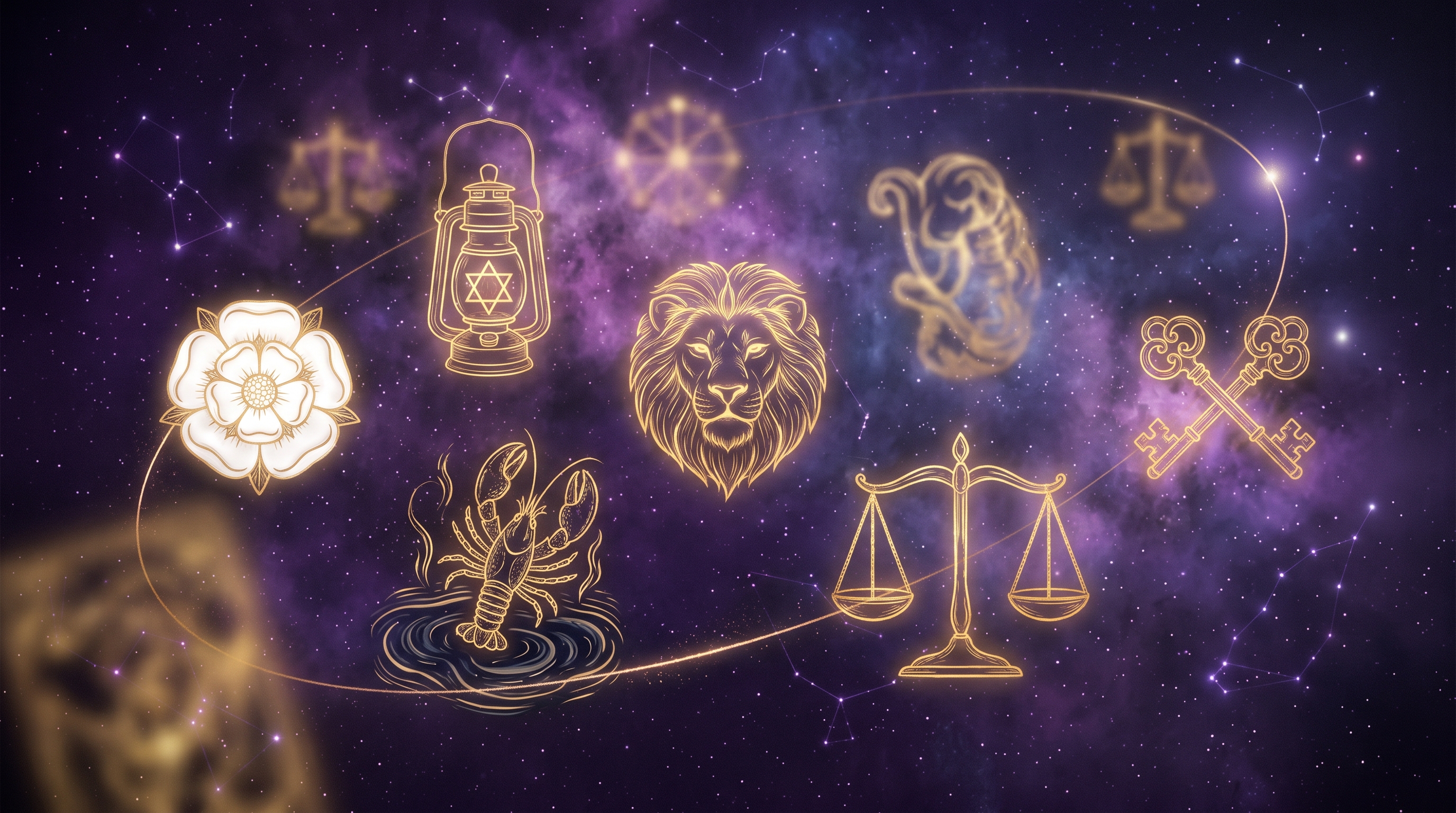
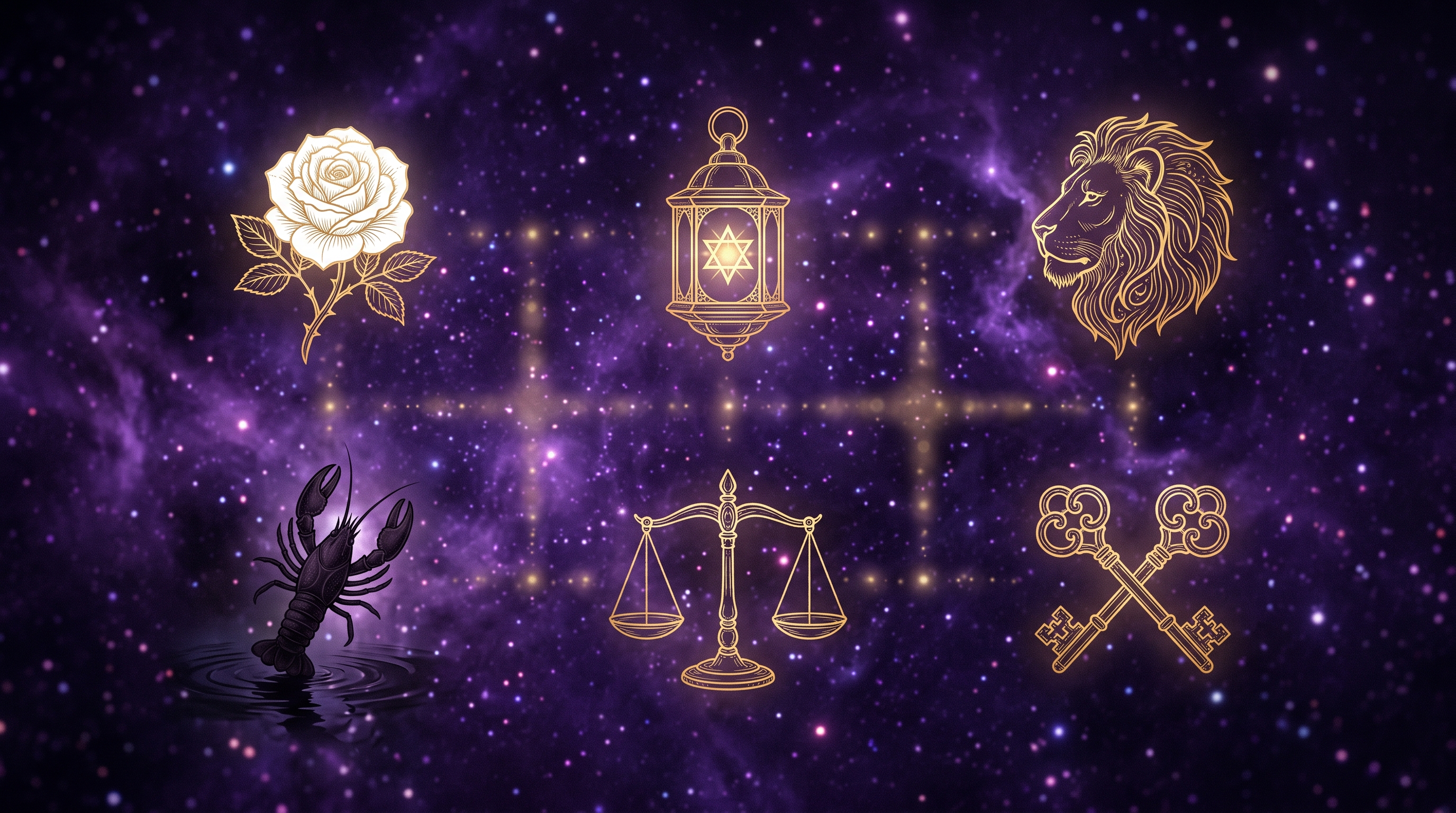
- 0 The Fool - White rose, cliff edge, a dog at his heels. The state before a story has a plot; reads as permission to start without a plan.
- 1 The Magician - Four suit tools on the table, infinity above his head. Everything needed is already present; the open question is aim, not supply.
- 2 The High Priestess - Veiled pillars, pomegranates, a half-hidden scroll. Information you are not meant to have yet; reads as stop asking and start listening.
- 3 The Empress - Wheat, waterfall, a Venus-stamped shield. Growth by tending rather than forcing; the body and material comfort as legitimate concerns.
- 4 The Emperor - Ram-headed throne, armor under the robe, bare mountains behind. Boundaries and what holding them costs; the landscape is stripped because order consumes something.
- 5 The Hierophant - Triple crown, crossed keys, two tonsured attendants. Inherited rules and institutions; the question is whether the orthodox route still fits.
- 6 The Lovers - An angel, a tree of flame, a tree of fruit, a mountain between them. A choice that exposes your values; romance is one instance, not the definition.
- 7 The Chariot - Two sphinxes pulling opposite ways, no reins visible. Momentum held by will while internally split: the card of going anyway.
Strength Through Temperance: The Inner Game (8-14)
- 8 Strength - A woman closing a lion's jaws, infinity above her. Patience doing what force cannot; appetite integrated rather than executed.
- 9 The Hermit - A lantern holding a six-pointed star, a staff, a snow peak. Withdrawal that produces something; the lamp lights exactly one step.
- 10 Wheel of Fortune - Sphinx, snake, jackal-headed figure, four creatures reading books. Cycles turn without your consent; the only variables are position and grip.
- 11 Justice - Upright sword, scales, red curtain. Consequence and clear accounting: a decision nobody will be allowed to appeal.
- 12 The Hanged Man - Crossed leg, halo, T-shaped tree, bound hands. Voluntary suspension; the pause that changes the question instead of answering it.
- 13 Death - Black armor, white rose banner, sun rising between two towers. Closure already underway; the sun rises before the rider has finished passing.
- 14 Temperance - One foot in water, one on land, two cups pouring. Slow mixing; here dilution is technique, not a failure of nerve.
The Devil Through the World: The Liberation Sequence (15-21)
- 15 The Devil - Inverted pentagram, torch, two loose chains, half-cube pedestal. The chains have slack: bondage by consent, a deal you keep renewing.
- 16 The Tower - Lightning, a crown blown off, two falling figures, three windows. Demolition of a structure that was already cracked; the strike is sudden, the crack was not.
- 17 The Star - Eight-pointed star, one foot in the pool, two jugs, an ibis in a tree. Repair after exposure; hope as maintenance rather than rescue.
- 18 The Moon - Crayfish leaving the water, a dog and a wolf, two towers, a face in the moon. Ambiguity and dream logic; the path is narrow and only partly lit.
- 19 The Sun - Child on a white horse, sunflowers, red banner, a wall behind. Visibility without complication; joy that arrives without a hidden invoice.
- 20 Judgement - An angel's trumpet, figures rising from coffins, a gray sea. A summons to respond: the reckoning is public, the answer is yours alone.
- 21 The World - Laurel wreath, two wands, four creatures, a figure mid-dance. Completion of a cycle rather than a life; the Fool's next step is implied inside it.
Recurring Symbols in Major Arcana Tarot Cards and What They Ask You to Notice
The 22 images were designed as one visual system, not 22 unrelated illustrations. A symbol that repeats is a pointer: it tells you which register of the reading you are standing in.
Color, Light, and Landscape
White marks consciousness or a page not yet written - the Fool's rose, Death's banner, the Sun's horse. Red is will and appetite, worn by the Magician, the Emperor, the Chariot driver. Blue is intuition and water, on the High Priestess and in Temperance's stream. Yellow is intellect and clear air. Black is both the unknown and the fertile dark: the priestess's pillars, Death's armor. Gold is value you have not paid for yet.
Landscape does more work than color. A garden means cultivation and available resources, as in the Empress and the Lovers. A mountain means aspiration and cost, as in the Emperor and the Hermit. Sea and pools mean the unconscious. City walls mean social order. Stripped ground or desert means structure has been removed, and the card will be about building it.
Tools, Figures, and Animals
Wands direct will. Cups receive. A sword discriminates, scales measure, keys grant access, and a lantern grants partial knowledge - never the full map.
Animals carry what the humans in the deck are not managing. The lion in Strength is appetite that can be integrated. The dog attends the Fool and the Moon, instinct that either guides or startles. The crayfish crawls out of the water in the Moon, something from below arriving on its own schedule. The sphinxes in the Chariot and the Wheel answer only to a riddle.
Angels appear where a decision is not entirely yours: Raphael in the Lovers, the pouring angel in Temperance, the trumpet in Judgement, the four creatures around the World.
Numbers - and Why They Misfire on the Majors
Borrowing pip-card numerology for the majors produces errors. In the minor suits, five is friction and loss. In the majors, 5 is the Hierophant: an institution, a lineage, a rulebook. Major numbers signal sequence and register - 1 initiation, 2 duality, 3 synthesis, 4 structure - then deliberately break the pattern. The sequence stops resolving arithmetically because the final cards are about what cannot be counted.
How Major Arcana Cards Reweight a Tarot Reading
Count the majors first, because that number changes how you read every other card. Zero or one: a tactical reading about events, where the minors govern. Two or three: a theme is forming underneath the events. Four or more: the reading is about a life stage, and tactical advice will feel useless because it is. The honest answer at that point is a change in identity, not a change of schedule.
Position matters more than count. A major in a lesson or outcome position outranks a major sitting in "how others see you." A major in the obstacle position usually means the obstacle is your own development rather than a person, and no amount of negotiating with the other party will move it.
Then grammar. Minors are nouns and verbs: an argument, an invoice, an apology, a move. Majors set the tense and mood of the whole sentence. Ask "what do I do this week" and the deck answers in minors. Ask "who am I becoming" and it answers in majors. Confusing those two questions is the most common reason a spread reads beautifully and helps no one. If you are still building fluency, how to read tarot cards covers the mechanics that matter before interpretation.
Reversals deserve their own note: a reversed major is rarely the opposite of the upright. The Empress reversed is not barrenness, it is growth you keep interrupting. The Sun reversed is visibility you are avoiding, not darkness. Read the same archetype with the channel blocked.
Daily Tarot and Love Tarot: Where Major Arcana Hit Hardest
Daily Tarot: One Card, Logged
A daily draw is where majors are weakest as advice and strongest as a trail. Two habits turn it into data: write down the card and one sentence about what actually happened, and count frequency at the end of the month. The card that appears three times in a month is the spine of that month even if it never showed up in a formal spread.
When a major lands on a single-card day, it usually is not describing the day. It is describing what the day is a rehearsal for. If your daily tarot keeps returning majors, stop pulling full spreads for a week and read the theme you are being shown instead of the schedule you are asking about.
Love Tarot: Whose Growth Is This?
The cleanest rule in relationship readings: a major describes the arc of your own development inside the relationship, while a minor describes the relationship's events. The Lovers and the Two of Cups illustrate it perfectly. Two of Cups is mutual rapport, easy and reciprocal - a connection that works. The Lovers is a choice that exposes your values, and it appears in relationships that look fine from the outside.
The Devil in a love spread almost never means a wicked partner. It means a renewal you keep signing: comfort, secrecy, dependency, a familiar argument. The Tower in a love spread usually describes the collapse of an assumption rather than the end of the relationship, often the assumption that nothing needed to change. The practical difference is where you put your effort: with Two of Cups you optimize the relationship, with the Lovers you optimize your honesty.
Major Arcana vs Minor Arcana: How 78 Tarot Cards Split the Work
| 22 Major Arcana | 56 Minor Arcana | |
|---|---|---|
| Describes | Life themes, initiations, stages | Events, people, moods, transactions |
| Timescale | Long, archetypal | Short, weekly |
| Agency | What you must become | What you can do |
| Strongest positions | Lesson, outcome, underlying theme | Action, obstacle, other people |
| Reversed | Blocked channel | Delay, denial, or the opposite |
| Element | None; applies everywhere | Fire, water, air, earth domains |
The majors are about a quarter of the deck and considerably more than a quarter of readings during a transition - and noticeably less during stable periods. Frequency inside a deck is not frequency inside a life. If you are new to the other 56 cards, the 56 Minor Arcana and their meanings is where to build the vocabulary that makes the majors legible by contrast.
Astrology and the Major Arcana: Zodiac Signs, Planets, and Rulership
Every major carries a planetary or zodiac attribution. These come from a specific esoteric lineage and differ between traditions, so treat them as lenses rather than law - but they explain each card's temperament and form the bridge between tarot reading and astrology.
| Card | Attribution | How it reads |
|---|---|---|
| 0 Fool | Uranus / air | Departure from the script |
| 1 Magician | Mercury | Language, timing, dexterity |
| 2 High Priestess | Moon | Tides, memory, secrecy |
| 3 Empress | Venus | Fertility, taste, abundance |
| 4 Emperor | Aries | Ignition and assertion |
| 5 Hierophant | Taurus | Doctrine, land, slow inheritance |
| 6 Lovers | Gemini | A choice between two versions |
| 7 Chariot | Cancer | Armor over sensitivity |
| 8 Strength | Leo | Appetite with dignity |
| 9 Hermit | Virgo | Analysis in solitude |
| 10 Wheel | Jupiter | Largesse and cycles |
| 11 Justice | Libra | Balance and verdict |
| 12 Hanged Man | Neptune / water | Suspension, dissolving |
| 13 Death | Scorpio | Endings, depth, unflinching |
| 14 Temperance | Sagittarius | The long blend |
| 15 Devil | Capricorn | Contracts, matter, control |
| 16 Tower | Mars | Rupture |
| 17 Star | Aquarius | Hope held at a distance |
| 18 Moon | Pisces | Dream, illusion, compassion |
| 19 Sun | Sun | Vitality and visibility |
| 20 Judgement | Pluto / fire | Reckoning and rebirth |
| 21 World | Saturn | Completion with structure |
Using them is straightforward. When a major's sign or planet matches a placement in your natal chart, the card tends to read as autobiography instead of advice: the Chariot is not "a journey" for someone with a Cancer moon, it is armor over sensitivity. Transits to those placements often coincide with the card's themes surfacing in daily draws. If you do not know your placements yet, reading a birth chart gives you the three that matter most here: Sun, Moon, and rising.
Four Misreadings Worth Retiring
- Death as bad news. The sun rises inside the card. It is a close-out, occasionally welcome, rarely sudden.
- The Tower as punishment. The Tower demolishes a structure that is already cracked. The card does not create the flaw; it stops you from maintaining it.
- The Devil as an external villain. The chains in the image have slack. The contract is renewable, and you are the one renewing it.
- "Majors are stronger, so a majors-heavy spread is better." It is more honest and less actionable. Before acting on it, pull a small minor-heavy spread to find the actual next move.
The mirror method is testable. Lay a Celtic Cross spread on a live question and count how many majors land in the final three positions. If three or more do, the reading is about a stage of your life rather than this week, and the mirror pair you drew will name the tension you are actually working through. The Fool is the constant, appearing at the start of every cycle with a smaller version of the same cliff. Try a tarot reading of your own and let the repeating card, not the dramatic one, set the agenda.