10 Essential Tarot Spreads: Step-by-Step Layouts for Every Question
Tommy Sherma
9/11/2026
The best tarot spread depends on your question: a three-card layout works for most daily readings, while the Celtic Cross suits complex situations. This framework turns random cards into a meaningful answer. If you're new to tarot, start with our beginner's guide to reading tarot cards, then explore these 10 essential layouts that cover almost every question.
Why Your Spread Matters
A spread is not decoration. Each card position carries a question, and each question shapes the story the cards tell. Choose the right layout and even a challenging card becomes clear guidance. Choose the wrong one, and a great draw can feel confusing.
1. The One-Card Daily Draw
Best for: quick guidance, starting your day, or clarifying a single situation.
Shuffle, focus on your intention, and draw a single card. That's it.
- Your card = today's theme or the key energy around your question.
The daily draw is the most forgiving spread — there is no wrong way to do it. Many readers draw one card every morning and journal the meaning at night.
2. Three-Card Past, Present, Future
Best for: a simple timeline, story-telling, and understanding how a situation developed.
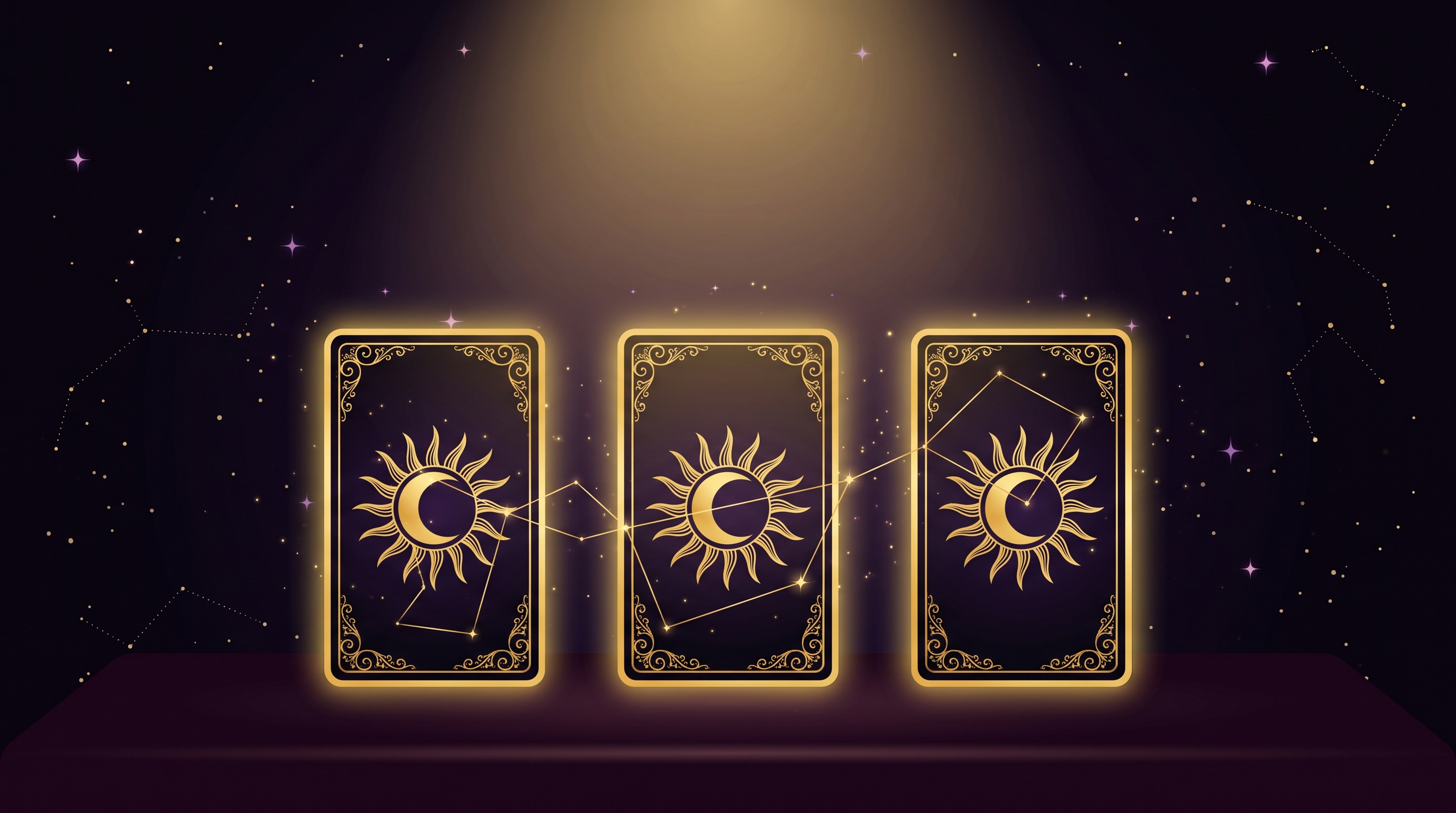
Draw three cards in a row:
- Card 1 = the past — what brought you here
- Card 2 = the present — where you are now
- Card 3 = the future — the likely direction if nothing changes
This spread works for nearly anything: relationships, work, or personal growth. If a card feels confusing, remember that Major Arcana cards carry the big life lessons, while Minor Arcana cards speak about daily details.
3. Three-Card Mind, Body, Spirit
Best for: self-care, burnout, and health-related questions.
Draw three cards left to right:
- Card 1 = your mind — thoughts and mental state
- Card 2 = your body — physical energy and habits
- Card 3 = your spirit — emotional and soul-level needs
Use this spread when you feel out of balance and need to see which part of yourself is asking for attention.
4. Five-Card Love & Relationship Spread
Best for: love questions, both new and long-term relationships.
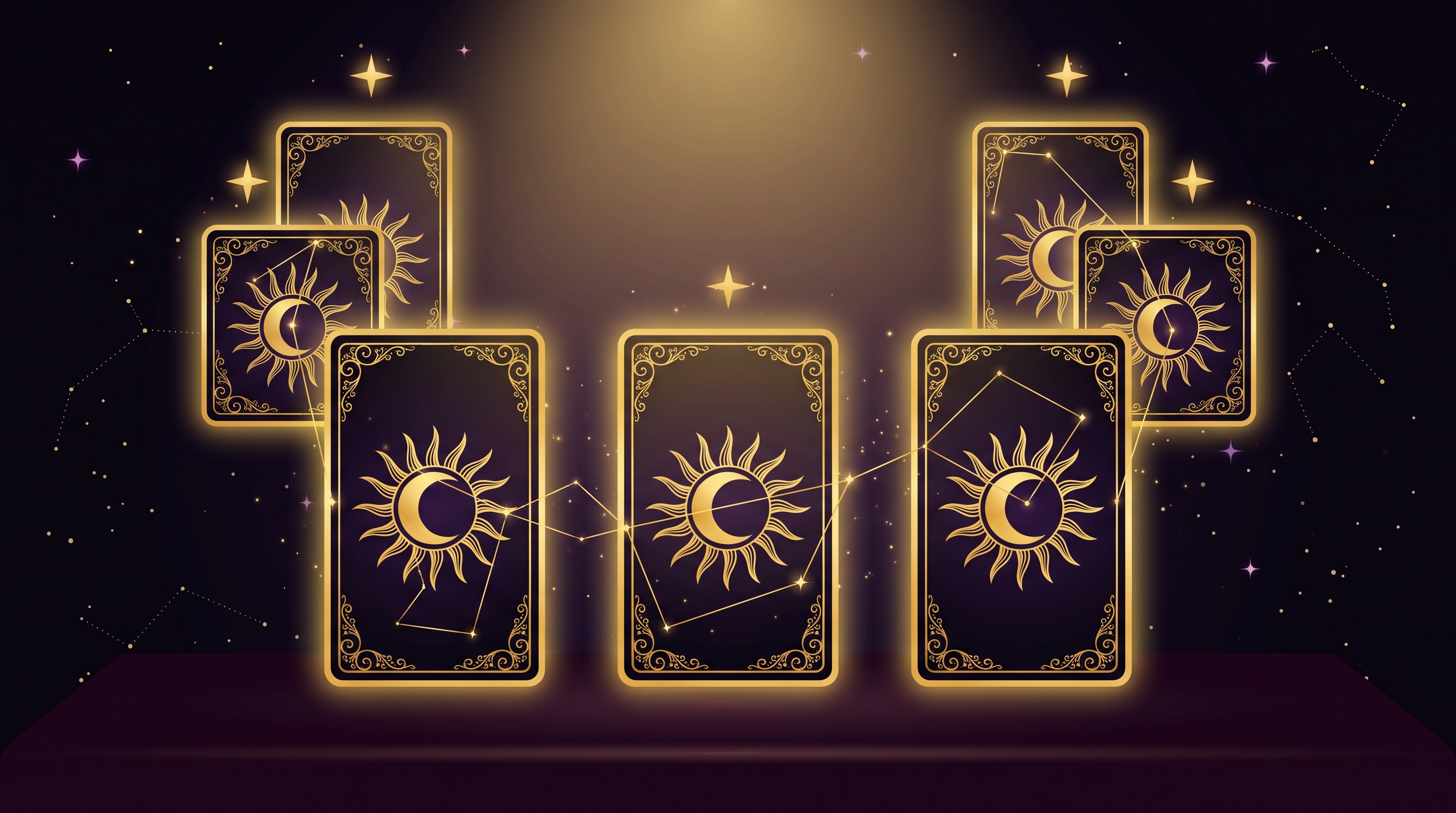
Lay out five cards in an arc:
- Card 1 = how you feel about this person
- Card 2 = how they feel about you
- Card 3 = what is working between you
- Card 4 = what is challenging the relationship
- Card 5 = the likely outcome
This spread reads cleaner than it sounds. The key is to keep card 2 as "their energy" — not their thoughts, but the energy you feel from them.
5. The Yes / No Spread
Best for: a direct answer when you need a decision point.
Draw three cards and read them together:
- Mostly upright, positive cards = yes, lean in
- Mostly reversed, heavy cards = no, or not yet
- A mix = the answer is "you are not ready to decide"
Yes/no questions are the most debated in tarot. Use this spread rarely — tarot is better at guiding choices than making them for you.
6. The Horseshoe Spread (7 Cards)
Best for: seeing a whole situation from start to finish.
Lay seven cards in a U-shape:
- Card 1 = the past
- Card 2 = the present
- Card 3 = hidden influences
- Card 4 = obstacles or challenges
- Card 5 = external influences
- Card 6 = your best course of action
- Card 7 = the likely outcome
The horseshoe is one of the most complete layouts that still fits on a small table. It is ideal for complex situations like job changes or family decisions.
7. The Career Path Spread (5 Cards)
Best for: job changes, promotions, and work dilemmas.
Lay five cards in a vertical line:
- Card 1 = your current role and energy
- Card 2 = your strengths at work
- Card 3 = what is holding you back
- Card 4 = the next step to take
- Card 5 = the longer-term direction
Read card 4 closely — it is usually the most actionable card in the spread.
8. The Decision-Making Spread (4 Cards)
Best for: choosing between two paths.
Lay four cards in a square:
- Card 1 = Path A, its energy and likely outcome
- Card 2 = Path A, its hidden cost
- Card 3 = Path B, its energy and likely outcome
- Card 4 = Path B, its hidden cost
Compare the two sides honestly. The spread does not decide for you — it shows what each road actually contains.
9. The Full Moon / New Moon Spread (4 Cards)
Best for: monthly rituals, manifesting, and letting go.
Lay four cards in a diamond:
- Card 1 = what to release (let go)
- Card 2 = what to keep and nurture
- Card 3 = what is coming into focus
- Card 4 = the gift of this lunar cycle
This is a beautiful monthly practice. Many readers combine it with journaling at each new and full moon.
10. The Celtic Cross (10 Cards)
Best for: the deepest questions — the ones that need a full map.
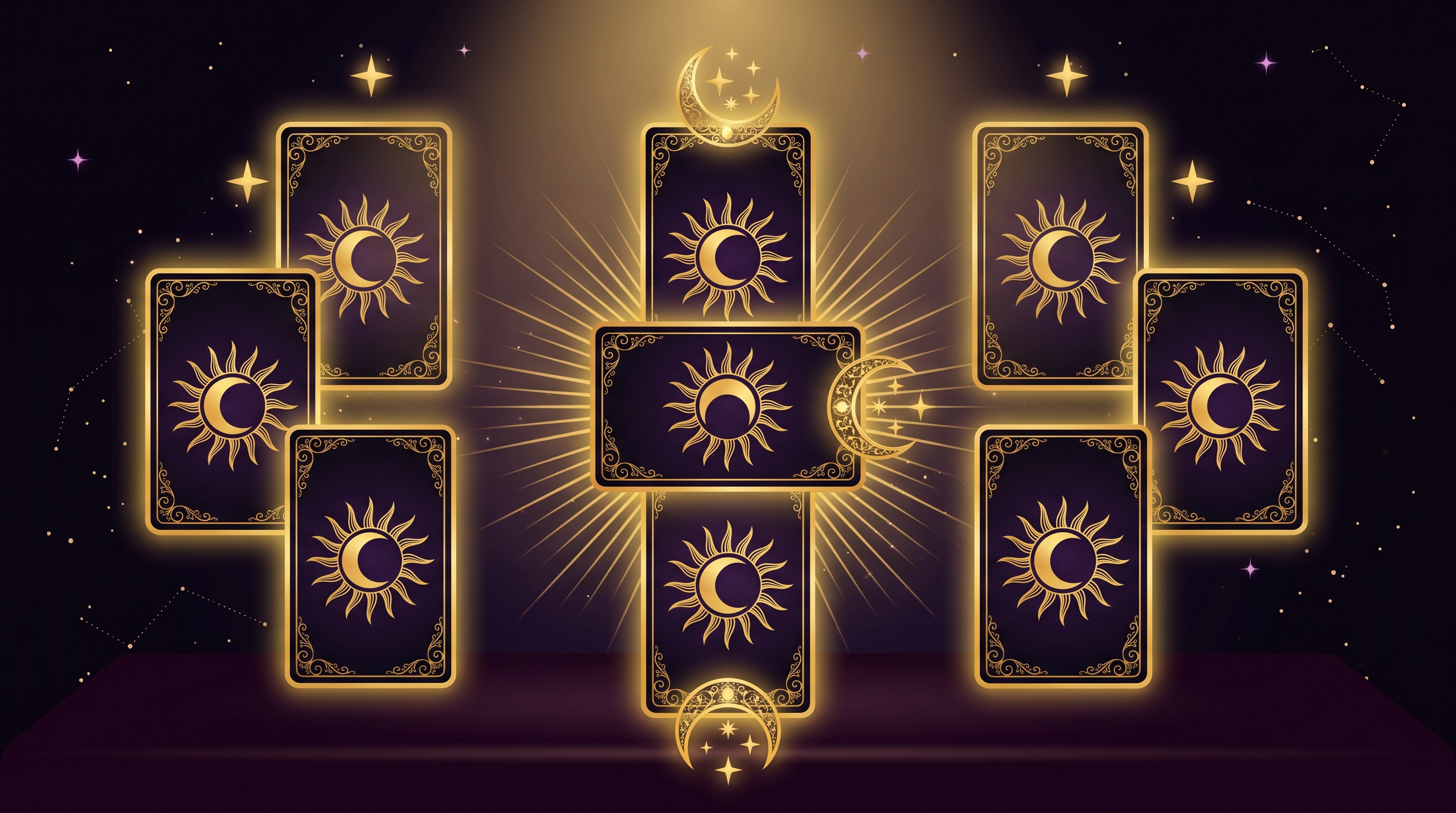
The Celtic Cross is the most famous and comprehensive tarot layout: two cards form a cross in the center, surrounded by eight cards that cover the conscious, the hidden, the past, the future, your own energy, and the influence of others.
Because it draws ten cards, it demands patience and experience. If you are new, master the first six spreads above before attempting it — and when you are ready, the Celtic Cross will reward you with one of the most detailed readings tarot can offer.
How to Choose the Right Spread
Still unsure which layout to use? Follow this quick rule of thumb:
- One-liner question → one-card draw
- Simple timeline → past, present, future
- Relationship question → five-card love spread
- Life situation feels tangled → the horseshoe
- A deep, soul-level question → the Celtic Cross
Also remember: tarot and astrology are natural companions. Many readers use birth chart insights alongside their spreads to add another layer of context — your Sun, Moon, and Rising signs reveal the personality themes your cards are reflecting on.
Your Turn: Draw a Card Now
You do not need a physical deck to practice. You can draw a free tarot card right now on Sortiax and read its meaning instantly — or try the full Celtic Cross reading when you are ready for a deeper answer.
Finally, if you are also curious about how the cards reflect your inner patterns, explore the Enneagram personality types — pairing tarot with personality work turns readings into real personal growth.
Remember: the cards do not tell your future — they mirror your present. Choose a spread that fits your question, and let the story unfold.
Try It Yourself
Shuffle a virtual deck and draw 1, 3 or 5 cards with instant meanings.
Try It Free →