Dreams About Being Chased: Why You Run and What Your Subconscious Is Avoiding
Tommy Sherma
9/26/2026

A recurring dream about being chased is your brain running a confrontation rehearsal for something you have not finished while awake — a conversation you keep postponing, a decision you keep re-dating, or an emotion you keep filing under 'later.' The pursuer is rarely the real threat; it is the avoided thing wearing a costume, and the running is the part of the loop you are awake for. Chase dreams cluster in weeks when you are carrying something that needs to be said out loud, which is why the same corridor, the same heavy legs and the same locked doors return instead of resolving.
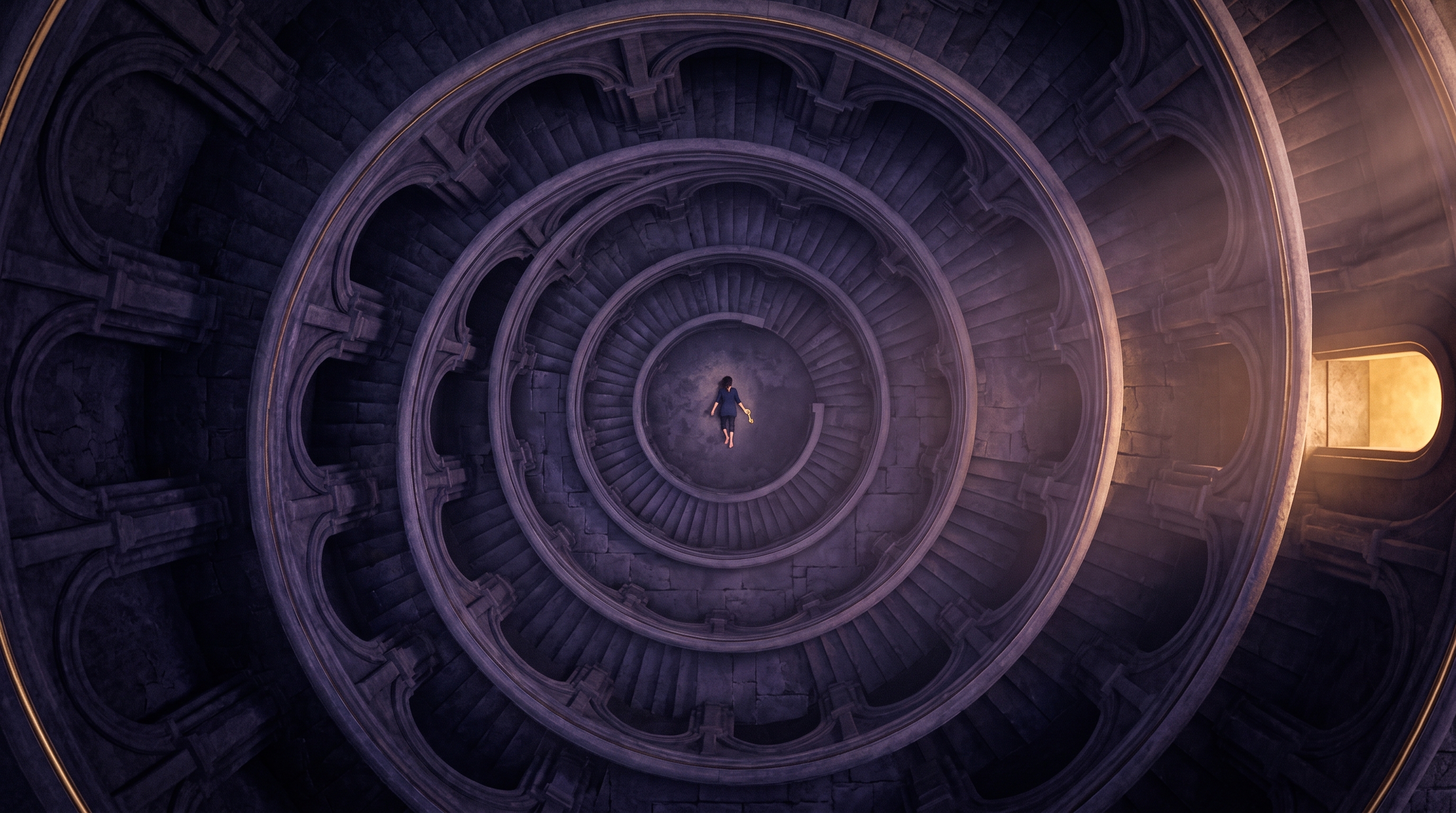
Dana described hers the way most people do: barefoot in a hotel corridor, doors that locked only from the inside, a chaser she could hear behind her but could never turn to see. Four nights a month, for eleven weeks. She assumed it was about a manager she had left years earlier. It was not. It was about the sentence she had rehearsed and never said to her business partner — that she wanted out. She said it on a Tuesday. The corridor dream stopped, and what replaced it was flat and boring: standing alone in an empty lobby. Same architecture, no running. That swap from motion to stillness is the clearest evidence that chase dreams are structural, not random.
What a Chase Dream Is Telling You in the First Ten Seconds
Chase dreams are not prophecy and not noise. They are the sleeping brain's threat-simulation system running an unfinished scenario with no exit, because the exit was never physical in the first place. During REM sleep your prefrontal cortex — the part that reasons, plans and finishes arguments — goes quiet, while the emotional brain keeps chewing on whatever you refused to chew on during the day. What comes back is the feeling, stripped of context and given legs.
That is why the detail people remember is almost never the pursuer's face. It is the carpet, the gravel, the sound of their own breathing. The feeling is the payload; the scenery is scaffolding.
Three Markers That Separate a Chase Dream From a Nightmare
- You cannot see the pursuer clearly — or you know exactly who it is but your head will not turn. Both versions are the same mechanism: the dream protects you from the confrontation it is built around.
- You are slower than you should be. Legs like wet sand, running through water, sprinting in place. This is REM muscle atonia leaking into the story: your body genuinely cannot run while you dream.
- You wake just before the catch. Rarely at the catch itself. The alarm fires at the exact moment the avoided thing would finally become visible.
When all three show up in the same dream, read it as information about an unfinished situation rather than a warning about real danger. The dream interpretation guide shows how those same markers behave in other dream categories if you want to compare.
Why the Dream Never Shows the Face
In dreams, attention behaves like a spotlight: what you look at grows, and what you refuse to look at stays undefined. A faceless chaser is a precise portrait of avoidance — you have handed the thing power, speed and a soundtrack without ever handing it a name. Name it awake and the dream usually loses its reason to keep rehearsing. This is also why the chaser often changes costume between nights while staying equally terrifying: the costume is negotiable, the unfinished business is not.

Dreams About Being Chased: Why You Run and What Your Subconscious Is Avoiding
Strip away the scenery and almost every chase dream sits in one of four avoidance buckets. The bucket matters less than the pattern: you are running from something whose next step requires your voice.
| What you are avoiding | Waking-life tell | How the chase looks | What ends it |
|---|---|---|---|
| A conversation | Rehearsing it in the shower, then not sending the message | Long corridors, doors that lock behind you | Saying the first sentence out loud |
| A decision | 'I'll deal with it after this week' | The chaser matches your pace no matter how fast you sprint | Picking a date, any date |
| A feeling you have labeled unacceptable | Anger arriving as tiredness; grief arriving as irritability | A silent pursuer who never speaks or threatens | Letting the feeling finish, even alone in a car |
| An identity you have outgrown | Staying in a role because leaving feels rude | The chase happens in old houses, old schools, first jobs | Telling one person what you actually want |
Notice that none of the four is solved by the dream. You can outrun a chaser a hundred nights in a row and wake up with the situation exactly where you left it, because the dream has no authority over the waking decision. It can only apply pressure.
Why the Chaser Never Closes the Gap — Until You Stop
Pursuers in dreams behave like attention, not like predators. They gain in proportion to how hard you push away. In most accounts the chase breaks the instant the dreamer stops and turns — and the chaser either shrinks into something ordinary (a coat on a chair, a dog, a shadow that thins out) or turns out to be the dreamer's own face. The size of the threat was always the size of the attention.
Two loops keep you running. The first is fear of what the confrontation will cost; the second, quieter one is fear of what it will change. If you are the sort of person who processes conflict by planning it for weeks, your dreams will happily run the scene for you instead. The personality type blueprint is a useful mirror here — it maps which types tend to rehearse a hard sentence until the moment has passed, and which tend to blurt it out and dream about something else entirely. For more on this, see the venus 5th house love dating.
Chaser, Setting, and Speed: How to Read the Symbols
The symbols in a chase dream are not a fixed dictionary. They are personal, and they repeat because your brain reuses the same location tag for the same emotional file. Still, some patterns are common enough to be worth checking against.
Who Is Chasing You
| Chaser | The reading that holds up most often |
|---|---|
| Faceless stranger | Unclaimed anger, or an obligation you never agreed to |
| Animal — dog, wolf, bear, bull | A body signal: exhaustion, ignored appetite, suppressed desire |
| Ex-partner | The role you played around them, still running on autopilot; rarely a wish to return |
| Masked figure or shadow | A trait you disown — most often ambition, neediness or rage |
| Police, teacher, boss | An internalized rule you never actually agreed with but still obey |
| Yourself | Something you keep postponing, chasing you for a start date |
The most misread entry on that list is the ex. People wake from it assuming they miss the person. More often the dream is doing the opposite: it is showing you the version of yourself that behaved, stayed small and said yes — and asking why that version is still driving. The ex is the costume. The smallness is the subject.
Where It Happens Changes the Message
- Childhood home — a pattern formed before you were able to argue with it.
- School, exam hall, stage — being evaluated; the fear of being caught not knowing.
- Office corridors, hotel hallways — obligation, role, the sense of being watched while performing.
- Stairs, parking garages, airports — liminal space, indecision, a transition you have not committed to.
- Water or sand — emotion; the ground itself slows you down.
- Dark forest at night — the unknown, usually a change you have already decided on but have not announced.
If your dream throws three of these at once — an old school, a faceless chaser and legs that will not move — start with the setting. Locations carry more specific meaning than chasers do. The dream symbol library sorts common settings and objects by theme when you need to untangle a crowded dream rather than a single image.
Why You Run: The Nervous System Behind the Flight Response
Dreams about being chased are not just psychological theatre; they are physiological events, and the physical details explain half of what frightens people about them.
REM Paralysis and the Heavy-Leg Feeling
During rapid-eye-movement sleep the brainstem switches off voluntary muscle control so that you do not act out your dreams. When the dream demands running and the body is offline, you get the signature sensations: legs that will not lift, punches that land in slow motion, a shout with no sound. That is not symbolism. It is hardware.
Sleep also front-loads threat rehearsal into the final third of the night, when REM periods lengthen and the body begins its slow climb toward morning alertness. It is why chase dreams often land in the hour before your alarm and why you wake already braced, heart going, with no visible enemy in the room.
Freeze, Fawn, and Why Some People Rarely Get Chase Dreams
If your default response to conflict is to appease rather than flee, your dreams may not chase you at all — they trap you instead. Common substitutes include being stuck in a room where nobody hears you, losing teeth, arriving somewhere undressed, or being invisible at your own event. Same avoided conversation, different defensive posture. If you have never had a chase dream but wake from those with the same dread, you are not exempt from the pattern; you are standing at a different point on it.
What It Means When Someone You Know Is Chasing You
A named chaser is almost never about the person and almost always about the role: the version of you that appears in their presence. Being chased by a parent often tracks the 'child who cannot disagree' program. Being chased by a manager tracks professional compliance. Being chased by a partner tracks whatever you stopped saying at home. Notice what you are unable to do in the dream — speak, stop, turn around — because that is the exact action you are avoiding while awake. Dive deeper with the dream interpretation guide.
A One-Week Protocol for Turning Around
You cannot command a dream to stop, but you can remove its fuel. The method below is a compressed version of how image rehearsal works in practice: you change the ending while awake, repeatedly, until the sleeping brain borrows the new script.
Nights One to Three: Find the Turn
Write down the dream the moment you wake, then answer one question: at what exact second did you pivot? The turn is the anchor point. Whatever you were thinking about right before your body turned and ran is usually within one step of the real subject — a name, a task, a date, a sentence you owe someone. Read more in the how to read tarot cards.
- Record the setting, the chaser, and the last thing you thought before running.
- Rate your waking dread from one to ten.
- Note what you did the previous evening: alcohol, late screens, an argument, a skipped meal.

Nights Four to Seven: Rehearse the Stop
Before sleep, in a relaxed state, replay the dream on purpose — and change the ending. Stop running. Turn. Look at the chaser until it resolves into something ordinary or into your own face. Hold the image for a minute or two. This is not positive thinking; it is giving the sleeping brain an alternative scene to reuse, which is exactly what it does with everything else you rehearse.
| Night | Task | What you write down |
|---|---|---|
| 1–3 | Log the dream and locate the turn | Setting, chaser, thought before running |
| 4–5 | Rehearse turning and facing, ten minutes before sleep | What the chaser becomes when you look |
| 6–7 | Say the waking sentence out loud, even alone | How the dream changed, even slightly |
The Daytime Half: A Dream Cannot Finish What You Will Not Start
The loop closes with one waking action taken within two days of a chase dream — not the whole confrontation, just the first move. Send the message. Book the call. Tell one person the true reason. If you want a language for the emotional layer underneath the chase, the moon sign tool shows where your instinctive reactions and comfort patterns sit, which is often the same territory the pursuer is standing on.
When a Chase Dream Stops Being Ordinary
Processing, Not Pathology
Chase dreams are normal during moves, deadlines, breakups, new jobs, health scares and long stretches of pretending everything is fine. They usually fade once the situation resolves or once you resolve it. A useful check: if the dream shifts even slightly after you take a waking action — a different corridor, a slower chaser, a shorter chase — the loop is working as intended.
Signs Worth Taking to a Professional
- The same chase replays with almost no variation for months, and you wake drenched and braced every time.
- The dream recreates a specific real event, and daytime reminders of it also trigger panic or numbness.
- You feel chest pressure or a sense of being held down while awake in bed, or you scream and thrash — those point to sleep paralysis, night terrors or a breathing issue, not to avoidance.
- Daytime hypervigilance, startle responses and broken sleep follow you through the week.
None of those require a dream dictionary. They require a doctor or a therapist, and the sooner the better.
The next time you wake mid-chase with your heart going, resist the urge to search the image and instead ask what sentence you have been avoiding all week. Log it, rehearse the turn, then take one waking step. If you want a structured place to keep the log and watch the pattern change across nights, Try dream — it is built for exactly this kind of tracking. And if you would rather start with one symbolic prompt tonight, the tarot draw tool gives you a single card to hold next to the dream while you write.