Birth Chart Aspects Explained: How to Read Planetary Aspects in Your Natal Chart
Tommy Sherma
9/17/2026
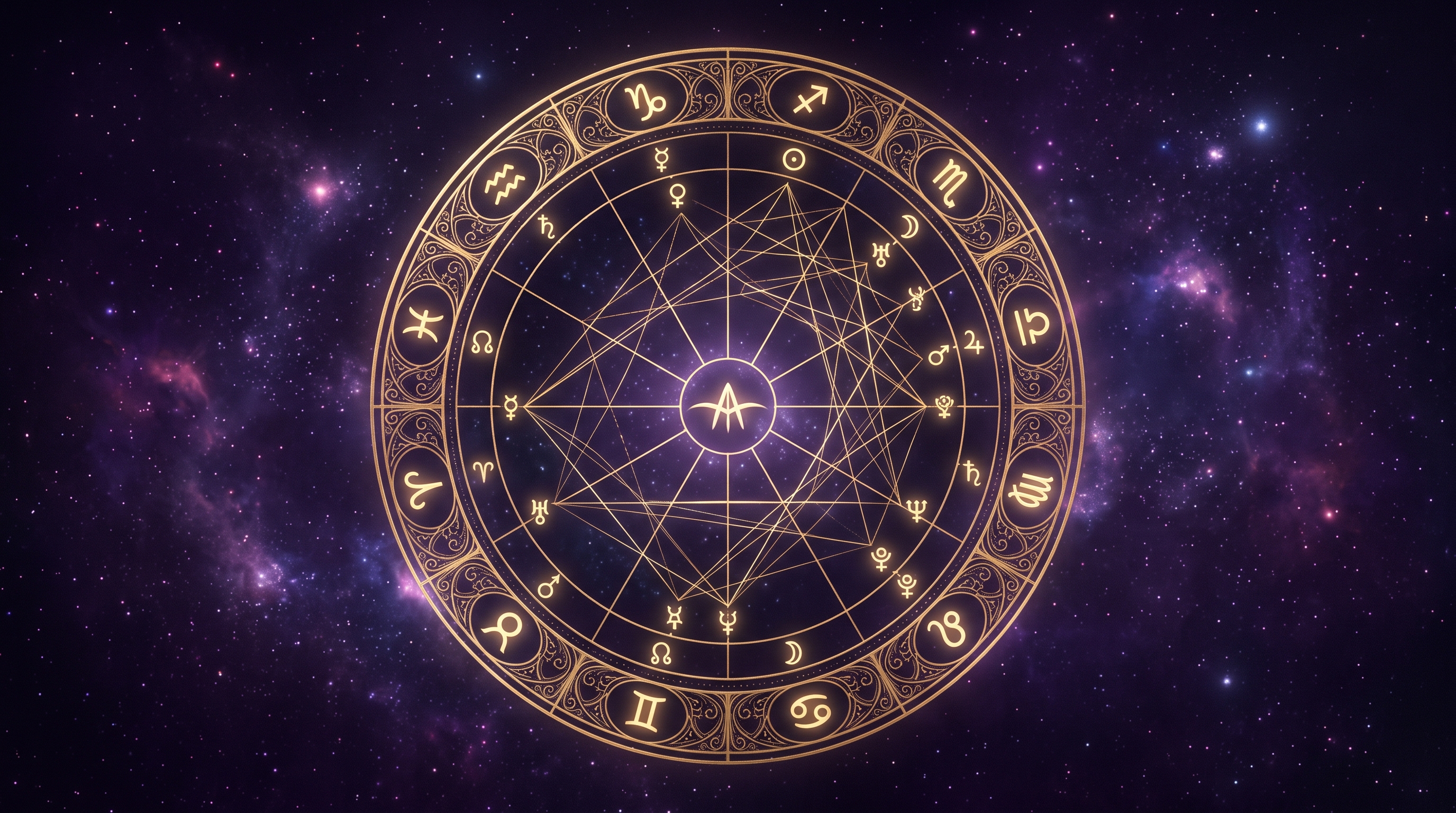
Birth chart aspects are the angular relationships between planets in your natal chart, and they reveal how those planets communicate with each other. Planets show what is acting, signs show how it acts, houses show where it happens, and aspects show the conversation between them. Once you can read those angles, a flat wheel of symbols becomes a living story. If the glyphs still look foreign, start with this guide to how to read a birth chart, then return here to decode the geometry.
What Are Birth Chart Aspects?
A birth chart aspect is the angular relationship between two planets. Two planets at a meaningful distance from each other on the wheel are said to be "in aspect," and that distance determines the flavor of their interaction. Because the zodiac is a circle, planets can only relate in certain recurring geometric patterns, and each pattern carries its own psychological tone.
Three facts matter right away. First, aspects connect planets across signs, so each planet's sign colors the exchange — Venus in a fire sign argues very differently from Venus in water. Second, aspects ignore house boundaries: two planets can aspect each other from opposite sides of the chart and still behave as a pair. Third, aspects are neutral by nature. Astrologers describe them as easy or challenging rather than good or bad, because both kinds of tension produce character.
Why Aspects Matter More Than Isolated Placements
A Sun in Leo means very little until you know whether that Sun is fused with Saturn or flowing with Jupiter. Placements are ingredients; aspects are the recipe. This is why a single tight aspect can say more about someone's life than a long list of signs.
Major and Minor Aspects
Astrology works with a small set of major aspects and a wider set of minor ones. The majors are the ones you will see in nearly every chart and the ones that carry the loudest message. Minors add texture — a whisper of nuance that refines an interpretation rather than defining it. Master the majors first.
How to Read Planetary Aspects: The Five Major Aspects
Learning how to read planetary aspects really comes down to recognizing five core patterns and knowing what each one feels like from the inside.
Conjunction — Fusion
Two planets in the same area of the zodiac blend into a single force. They cannot act separately, so the reading sounds like "both, always, at once." A conjunction is a powerhouse when the planets cooperate and a bottleneck when one drowns out the other.
Sextile — Friendly Opportunity
Planets in sextile sit two signs apart and share compatible elements. The sextile is an open door: the talent is available, but you have to walk through it. It rewards initiative instead of handing results over.
Square — Friction That Builds Muscle
A square places planets at a right angle on the wheel, in signs of the same modality but clashing elements. This is tension with a purpose — the inner argument between "I want" and "I should." Squares produce the strongest growth when you stop trying to silence one side.
Trine — Effortless Flow
Trines link planets in the same element, roughly a third of the wheel apart. Energy moves without resistance, which is why trines are called the lucky aspects. The shadow side is complacency: what comes easily is often taken for granted and left undeveloped.
Opposition — The Mirror
An opposition splits the wheel in half, placing two planets in opposite signs and often opposite houses. The tension is relational: you tend to project one end onto other people until you learn to hold both. Mature oppositions turn into balance and unusual objectivity.
Orbs, Applying and Separating in Your Natal Chart Reading
An orb is the margin of leeway allowed around an exact aspect. Two planets do not need to be perfectly aligned to interact; they simply need to be close enough that their signals overlap. The tighter the orb, the louder the aspect.
Tight and Wide Orbs
A tight contact dominates a chart and tends to show up in how someone moves through the world. A wide contact whispers in the background, surfacing only under pressure. When two interpretations conflict, weigh the orb first — closeness beats quantity.
Applying and Separating Aspects
If the faster-moving planet is still traveling toward the exact angle, the aspect is applying. If it has already passed, the aspect is separating. Applying aspects feel urgent, like unfinished business pulling you forward. Separating aspects feel settled, like a skill already absorbed into the personality.
Aspect Patterns: When Aspects Form Shapes
Aspect patterns appear when several planets aspect each other at once, forming a recognizable shape. A pattern reads as one story rather than several separate contacts, which is why experienced astrologers scan for shapes before reading line by line.
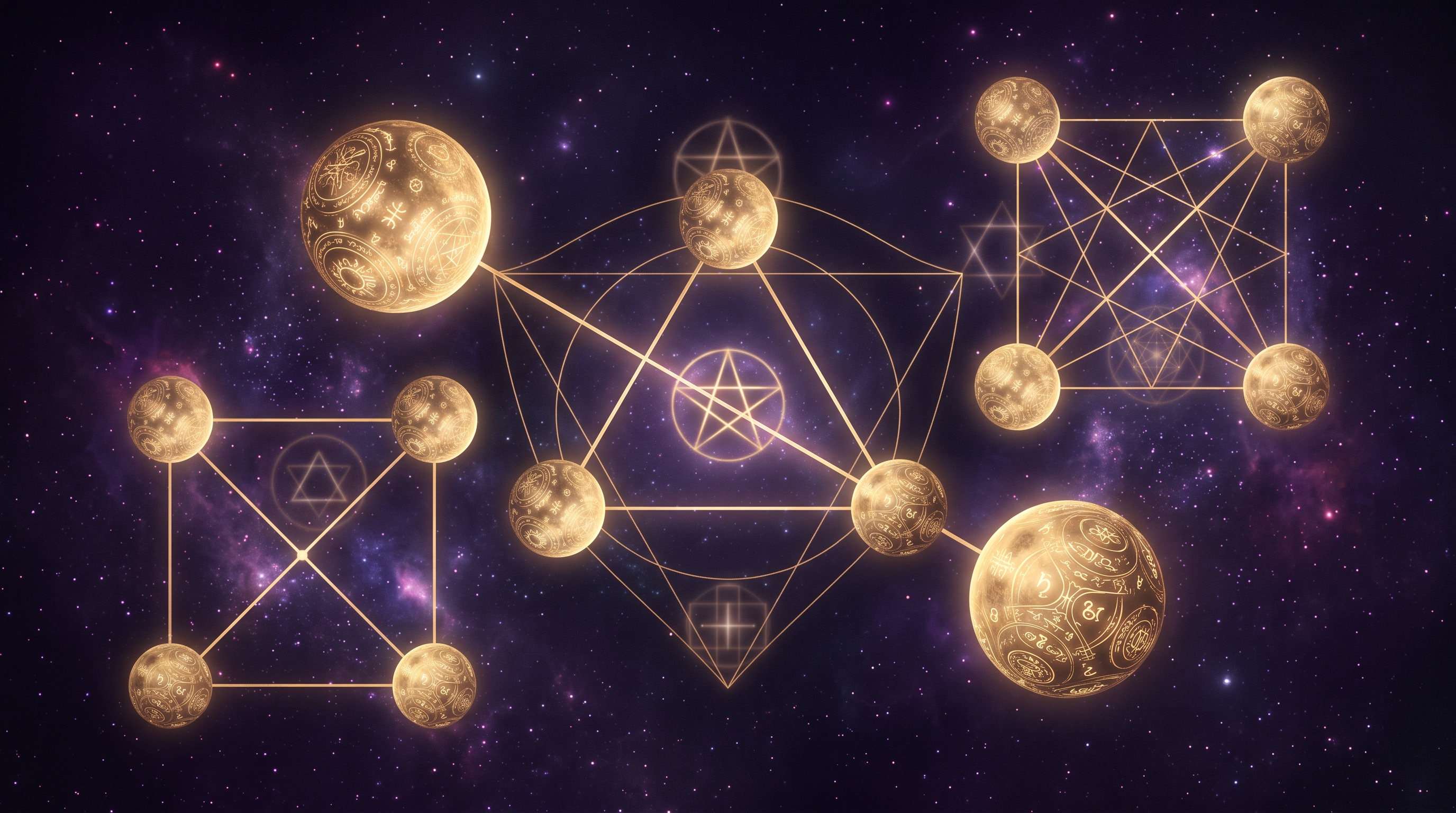
Stellium
A cluster of planets in one sign or house concentrates enormous energy in a single area of life. A stellium gives focus and intensity, and often a blind spot: everything else in the chart gets less attention.
Grand Trine
Three planets in the same element forming a closed triangle of trines. This is a self-contained flow of talent, comfort and ease. Its risk is inertia — the loop works so smoothly that the person never tests it against resistance.
T-Square
Two planets in opposition, both squared by a third. The third planet becomes the release valve, and life keeps routing pressure through it. T-squares are demanding but remarkably productive once the friction is directed.
Grand Cross
Two oppositions crossing each other produce a four-cornered standoff. This pattern creates a life of constant negotiation between competing needs, and it builds extraordinary resilience when handled consciously.
Reading Aspects to Your Sun Sign, Moon Sign and Rising Sign
The fastest way into a chart is to read aspects to the three most personal points: the Sun, the Moon and the Ascendant.
Sun Aspects: Identity Under Pressure or in Flow
Sun contacts describe will, vitality and self-image. A challenged Sun often means a person who had to earn their confidence; a supported Sun means confidence that arrives naturally and needs to be used well.
Moon Aspects: Emotional Wiring
Moon contacts describe emotional needs, moods and early安全感 conditioning. To read them in depth, work through our Moon sign meaning guide, then check which planets touch that Moon and how tightly.
Ascendant Aspects: The First Impression
Ascendant contacts describe the interface between you and the world — how you enter a room and how strangers read you. Pair this with the rising sign and Ascendant guide before combining it with Sun and Moon contacts.
Zodiac Signs and Elemental Balance in Aspects
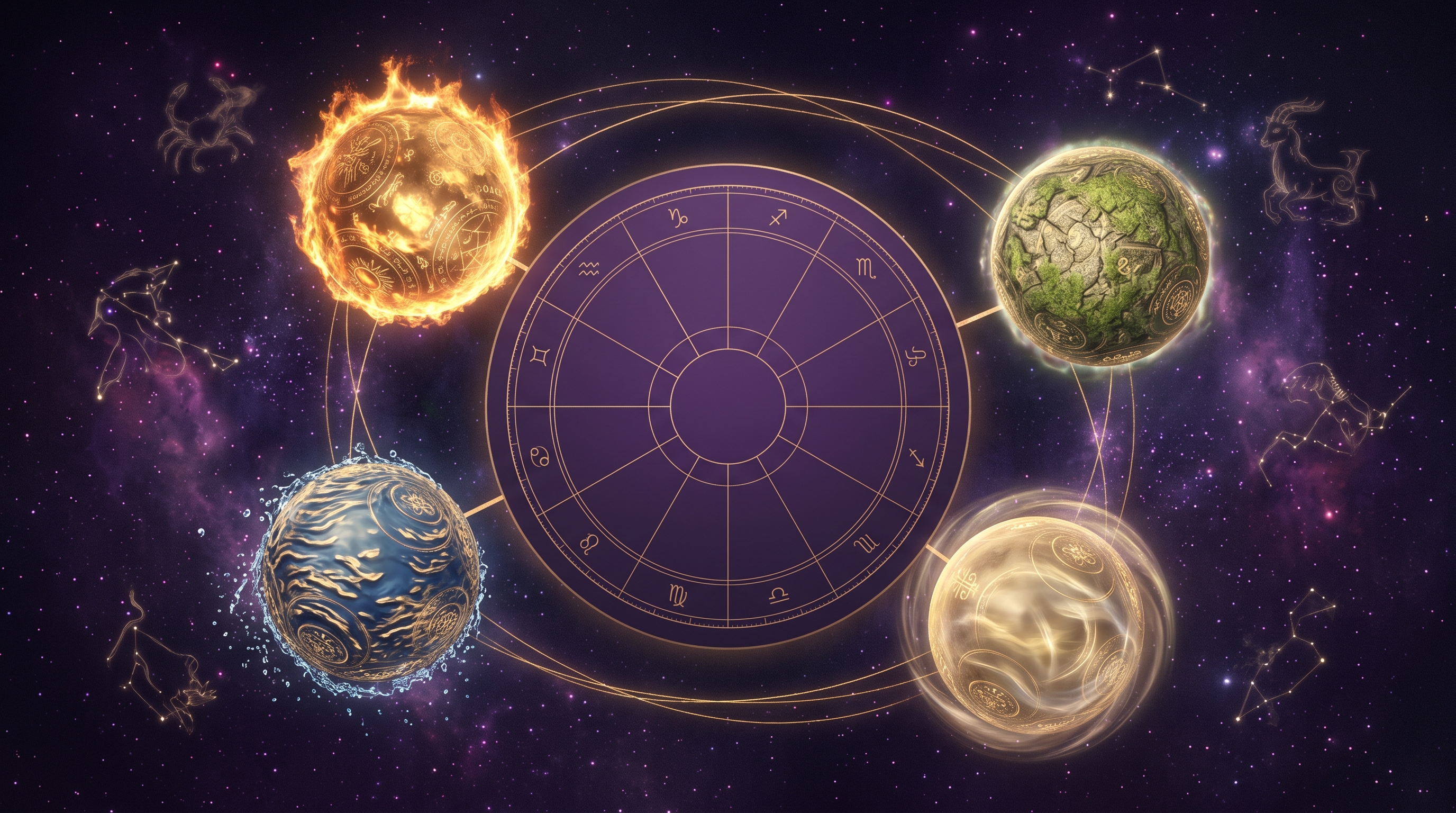
Aspect counting is also element counting. Fire-heavy aspects produce heat, initiative and drama; earth-heavy ones produce patience and practicality; air emphasizes ideas and conversation; water emphasizes feeling and memory. An element that appears rarely in the aspect list becomes a skill the person must consciously build rather than inherit.
Counting Elements
Track which elements the aspecting planets occupy, not just their signs. Repeated fire trines can look impressive while leaving the chart without grounding.
Counting Modalities
Cardinal emphasis initiates, fixed emphasis sustains, and mutable emphasis adapts. A chart with almost no mutable aspects often struggles with change, while an over-mutable chart struggles to finish anything.
A Step-by-Step Method for Interpreting Aspects
Use the same sequence every time and interpretations become fast and consistent.
- Locate the placements. Note each planet's sign and house, using the birth chart houses explained breakdown to know which arena is active.
- Name the aspect and measure the orb. A tight square outranks a wide trine in importance.
- Assign roles. Decide what each planet needs and what it does.
- Judge the tone. Easy, challenging, or mixed — say it plainly.
- Write one sentence in human language. If the sentence sounds like jargon, rewrite it until it sounds like a person.
Worked Example: Venus Square Saturn
Venus wants pleasure, connection and ease. Saturn wants proof, structure and time. Square them and you get someone who filters affection through tests of worthiness — slow to trust, loyal once committed, and often talented at turning taste into craft. Nothing here is doomed; it is simply a relationship that requires patience to run well.
Birth chart aspects explained in one line: planets are people in a room, and the aspects are the conversations between them. Learn the five majors cold, respect the orb, look for patterns, and always translate the geometry back into lived experience. When you are ready to see your own lines drawn out properly, try natal-chart and read those conversations in your own wheel.
Try It Yourself
Generate your full birth chart free — sun, moon, rising sign and all planet placements.
Try It Free →