Birth Chart Houses Explained: How the 12 Houses Shape Your Life and Relationships
Tommy Sherma
9/16/2026

The twelve houses in astrology are the wheel's life-mapping segments, each ruling a concrete area like money, siblings, marriage, or midnight worries. Unlike your Sun sign's personality sketch, the houses show how that energy plays out in real life. If the chart still looks like a subway map, start with our guide on how to read a birth chart, then return—the houses make everything click.
What Birth Chart Houses Actually Measure
Keep the three main ingredients separate and the whole system gets simpler:
- Planets describe what is acting — drive, emotion, thought, love, fear.
- Signs describe how it acts — the style, tone, and instinct behind the action.
- Houses describe where it happens — the actual department of life where the story plays out.
A planet is an actor, a sign is the costume, and a house is the stage. Same actor, different stage, completely different play. Mars in Leo is theatrical and proud no matter where it sits, but Mars in Leo in the Second House is theatrical and proud about money, and Mars in Leo in the Sixth House is theatrical and proud about work and daily routines.
Houses vs Signs: The Difference That Confuses Everyone
Beginners blend these two constantly, and it produces readings that sound profound and mean nothing. The signs are twelve equal slices of the zodiac belt, measured from the Sun's path. The houses are twelve unequal slices of the sky at the exact moment and place you were born, measured from the eastern horizon. Signs are the same for everyone born in a given period; houses are unique to you, which is why twins born a few minutes apart can live very different lives.
Why Houses Run Counterclockwise From the Ascendant
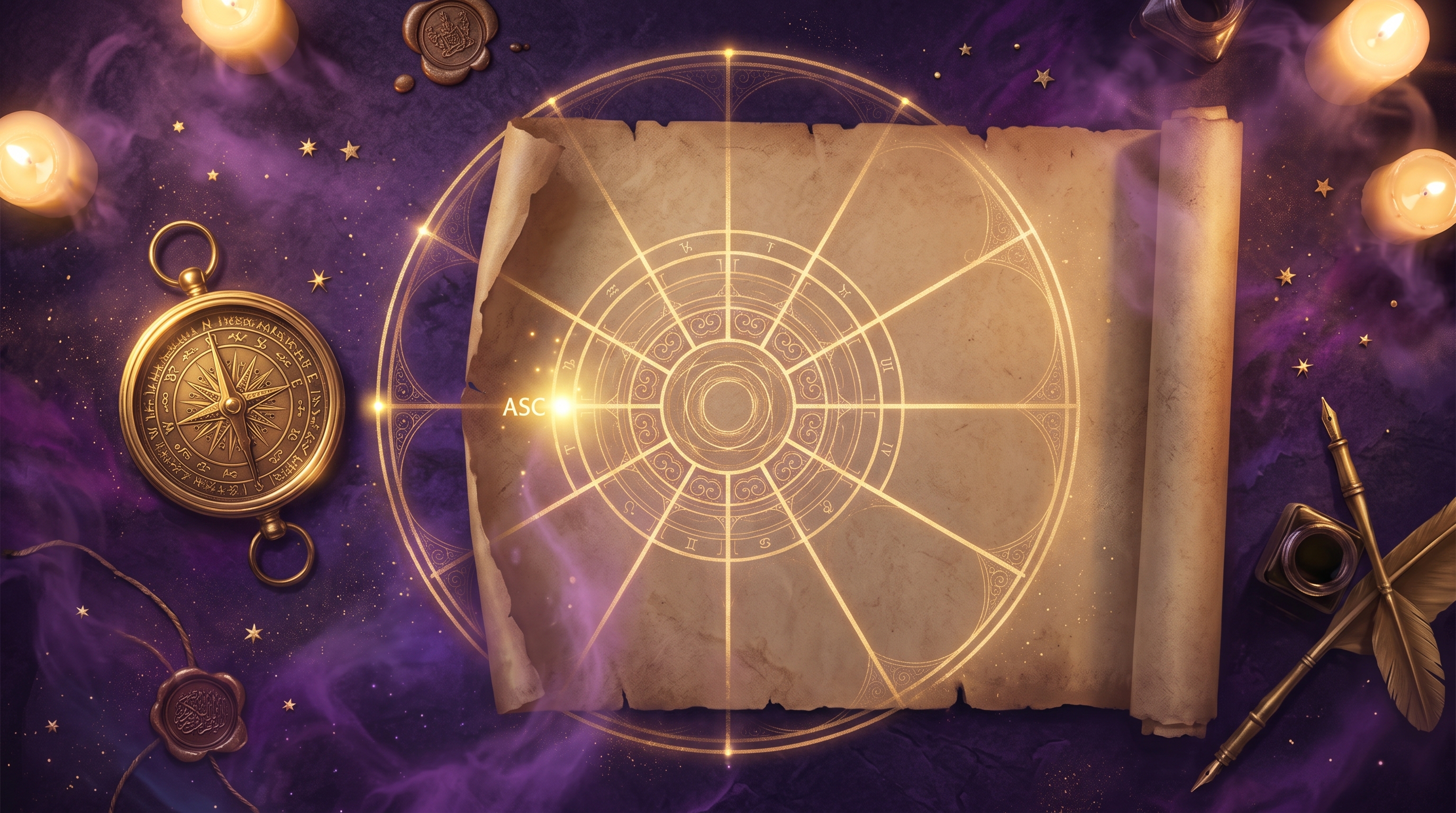
The Ascendant — the sign rising on the eastern horizon at your birth — anchors the whole wheel on the left side, and the First House begins there. From that point the houses travel counterclockwise, moving from the raw self outward into family, partnership, career, and finally the invisible territory of the Twelfth House. The order is not random: it traces a life from "I exist" to "I dissolve back into everything."
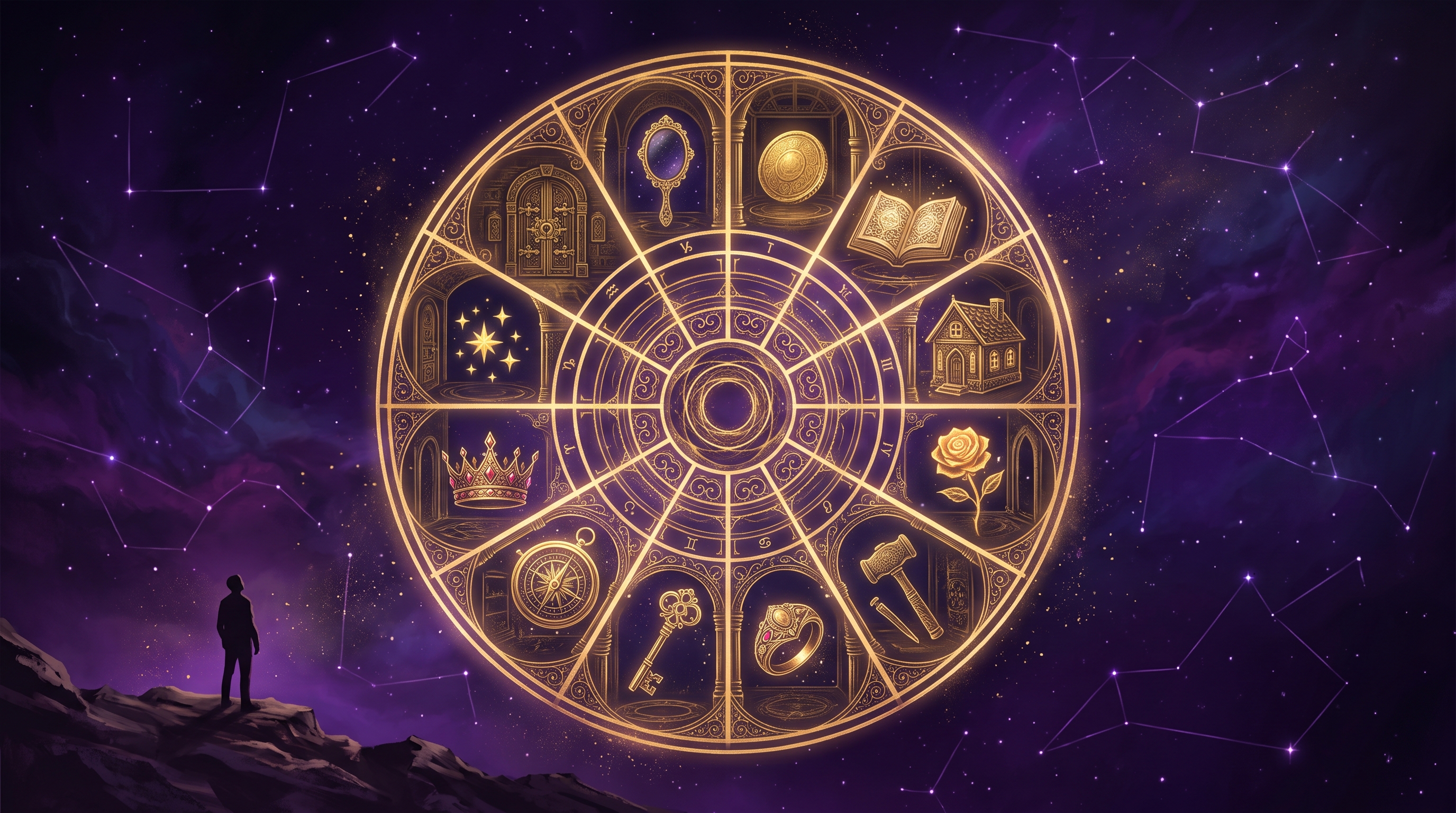
The 12 Houses and What Each One Rules
First, Second, and Third Houses: Identity, Money, and Voice
The First House covers your body, your appearance, first impressions, and the mask you wear without noticing. It is the house of instinctive approach — how you walk into a room before you say a word. Its cusp is your rising sign and ascendant, which is why that single point colors so much of how strangers read you.
The Second House rules money you earn yourself, possessions, and self-worth — including the uncomfortable link between the two. It also governs values: what you consider genuinely valuable, not just expensive.
The Third House is ordinary communication. Siblings, cousins, neighbors, short trips, texting habits, early schooling, the way you gather and pass along information.
Fourth, Fifth, and Sixth Houses: Home, Play, and Routine
The Fourth House is your private foundation: family of origin, ancestry, the feeling of home, and the parent who shaped the household atmosphere. The Moon works naturally here, and if you want to understand the emotional wiring behind this house, Moon sign meaning is the place to look.
The Fifth House rules romance before commitment, flirtation, creative work, children, and anything done purely for delight.
The Sixth House handles the unglamorous machinery of life: your day job, coworkers, health habits, exercise, pets, and the systems that keep your body and schedule running.
Seventh, Eighth, and Ninth Houses: Partnership, Depth, and Belief
The Seventh House is committed partnership — marriage, business partners, close alliances, and open enemies. It describes what you attract and what you project onto other people.
The Eighth House goes deeper: shared finances, debts, inheritance, taxes, intimacy, grief, therapy, and any experience that breaks you open and rebuilds you.
The Ninth House rules distance and meaning — travel, higher education, philosophy, foreign cultures, publishing, and the beliefs you would defend in an argument.
Tenth, Eleventh, and Twelfth Houses: Status, Community, and the Unseen
The Tenth House is your public standing: career, reputation, ambition, and the legacy you are building whether or not you admit you want one.
The Eleventh House covers friends, networks, group projects, activism, and your hopes for the future — the version of your life that involves other people.
The Twelfth House is the last and quietest: solitude, dreams, retreat, hospitals and institutions, hidden fears, and the spiritual residue you carry without naming.

Empty Houses Are Not Broken Houses
A house with no planets is not missing anything. Every house has a sign sitting on its cusp, and that sign has a ruling planet that keeps the house running in the background. An empty Seventh House with Libra on the cusp is still a partnership-driven part of your chart — it simply means partnership is not where your loudest drama lives.
Transits also visit empty houses constantly, lighting them up for seasons at a time. And a crowded house is not a flaw; it is an emphasis. Several planets stacked in the Sixth House do not mean you are doomed to chores — they mean work, health, and daily discipline are where your life's main plot unfolds.
How the Ruler of Each House Changes the Story
This is the technique that turns a list of house meanings into an actual reading.
Every house cusp carries a sign. The ruler of that sign becomes the landlord of the house, and wherever that ruling planet sits tells you where the house's business gets handled.
- Seventh House cusp in Capricorn puts Saturn in charge of partnership. If Saturn sits in the Tenth House, relationships tend to arrive through career, status, or public life — and they carry a serious, long-term tone.
- Fourth House cusp in Sagittarius puts Jupiter in charge of home. Jupiter in the Ninth House suggests a family shaped by travel, study, or another culture.
Same house, different ruler, entirely different life. This is also why the twelve underlying twelve zodiac signs matter even in a house-focused reading: each sign hands the keys of a house to a specific planet.
Reading Relationships Through the Houses
Relationship astrology is where houses earn their reputation.
Fifth House: How You Flirt
Planets here show your play style — whether you charm with humor, intensity, or distance, and whether dating feels like a game you enjoy or a performance you endure.
Seventh House: Who You Attract
This house describes the partner archetype you keep meeting, including the qualities you deny in yourself and then locate in someone else.
Eighth House: How Deep You Go
Placements here reveal your appetite for merging — emotionally, financially, physically — and how you handle the vulnerability that follows.
Fourth House: What Home Feels Like to You
Long-term compatibility often lives here. Two people can share a Sun sign and still want completely different homes, families, and levels of privacy. The Fourth House tells you which one you are.
Layer the Moon, Venus, and Mars on top of these houses and you have a portrait of how you love, what you need, and what you will not tolerate.
How to Find Your Own House Placements
A Step-by-Step Method
- Get your exact birth time and birth place. Houses shift roughly every two hours, so a rounded time produces a rounded reading.
- Generate your chart and locate the Ascendant on the left side of the wheel.
- Read the sign sitting on each of the twelve house cusps and write them down in order.
- List which planets fall in which houses — note any house with two or more planets.
- For each house that matters to your question, identify its ruling planet and find which house that planet occupies.
What to Do Without an Exact Birth Time
If your birth time is genuinely unknown, house cusps become unreliable and the Ascendant is a guess. You can still work with sign placements and planetary aspects, and a solar chart — which places the Sun on the First House cusp — gives a rough sketch rather than a portrait. Treat house claims from an unknown birth time as possibilities, not facts.
Putting the Whole Wheel Together
Reading houses well is mostly a matter of patience. Take one placement at a time and build a sentence: the planet shows what is acting, the sign shows the style, the house shows the arena, and the ruler shows where the story routes next. Then look for patterns — clusters in one house, planets sitting opposite each other across a house axis, the same house showing up in every question you ask about your life.
If you want the wheel drawn out for you with each house clearly labeled and your planets placed inside it, try natal-chart — it maps your exact house cusps, marks your Ascendant, and lets you trace rulerships without doing the geometry by hand. For a plain-language walkthrough of that whole process from scratch, keep our beginner's guide to reading a natal chart open beside it.
Try It Yourself
Generate your full birth chart free — sun, moon, rising sign and all planet placements.
Try It Free →