How to Read a Birth Chart: Beginner's Guide to Natal Chart Interpretation
Tommy Sherma
9/16/2026
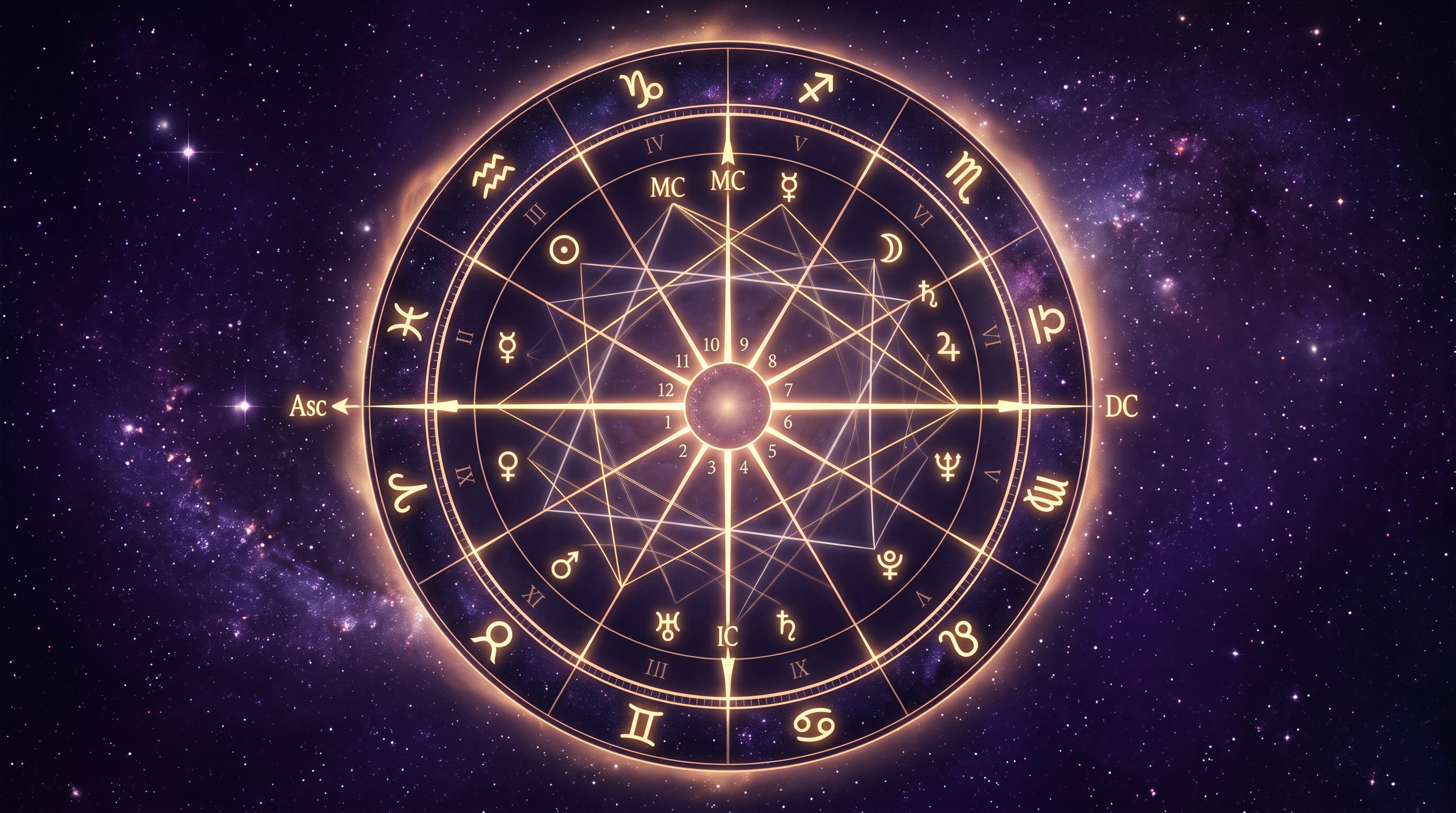
To read a birth chart, start by locating the Sun, Moon, planets, and key angles as they sat relative to your birthplace at the moment you were born. This natal chart is a circle of symbols, not a single sign, so interpretation follows a sequence: find the raw energy, see how it behaves, where it plays out, and which parts of life it touches. For beginners, the goal isn't to decode everything at once but to build a repeatable reading method grounded in natal chart basics.
What a Birth Chart Actually Shows
A natal chart is a snapshot. The horizon line splits the wheel into upper and lower halves; the vertical line marks the highest point and the lowest point. Planets are placed by zodiac sign and house. Signs describe style, houses describe territory, and aspects describe relationships between planets.
The chart does not say you are only this. It says: this energy is present, it tends to move in this way, and it shows up most clearly in this area of life. That distinction keeps a reading useful and humane.
Gather Birth Data Before You Read Anything
Why Birth Time Changes the Chart
The rising sign and house cusps move quickly. A difference of minutes can shift the Ascendant, the chart ruler, and the house placements of the Moon and planets. If you do not know your birth time, you can still read planetary signs and major aspects, but house-based statements become less precise. Use a birth time from a record, not a guess, whenever possible.
Set the Chart Wheel in Your Mind
Picture a clock face. The Ascendant is the left horizon, the Descendant is the right, the Midheaven is near the top, and the Imum Coeli is near the bottom. Houses move counterclockwise from the Ascendant. Once you can see that frame, you can find any planet faster.
The Core Building Blocks of a Natal Chart
Planets: The What
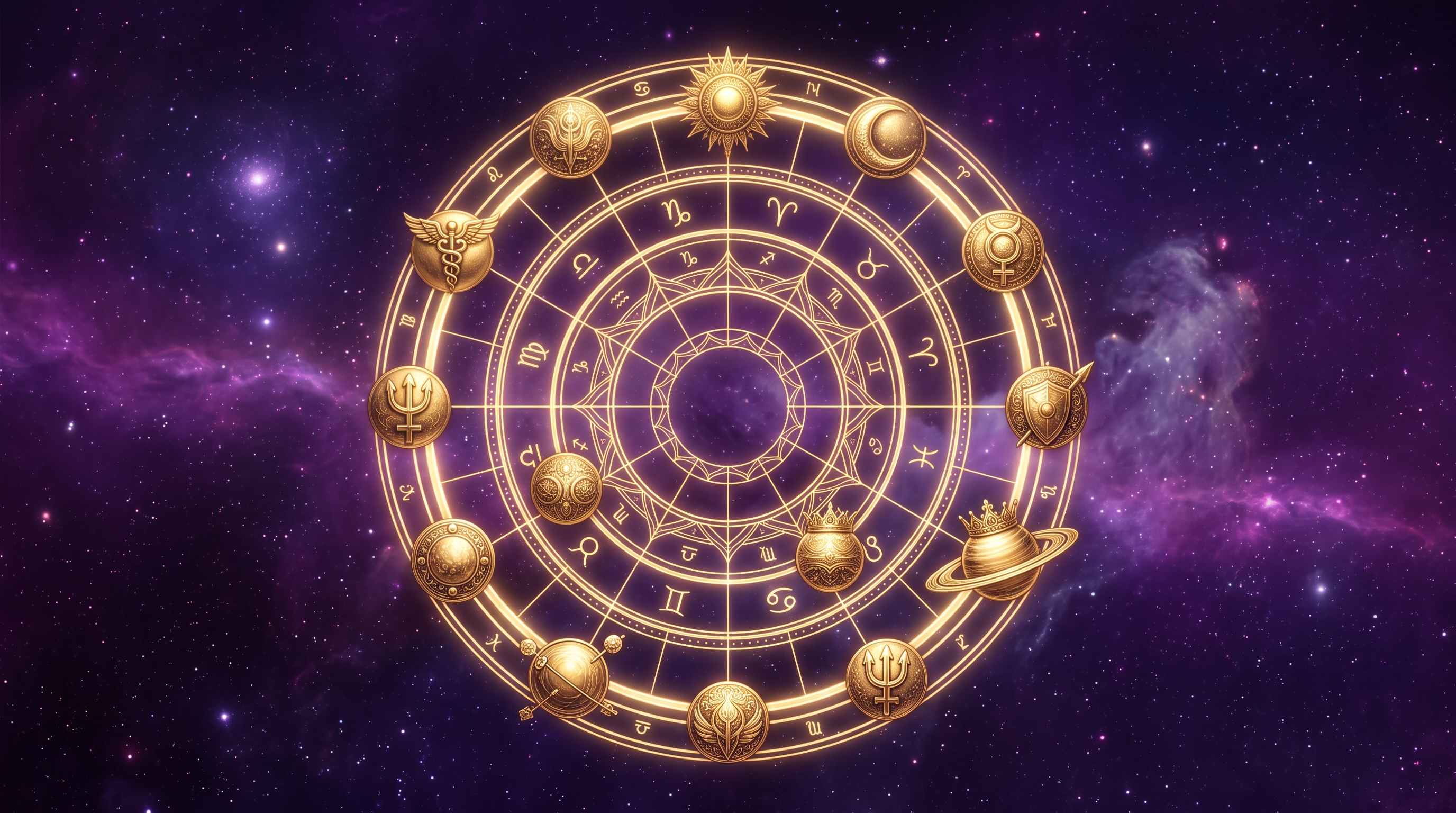
Planets are the actors. The Sun is identity and vitality. The Moon is emotional instinct and memory. Mercury is thinking and speech. Venus is attraction, values, and pleasure. Mars is drive, anger, and courage. Jupiter expands. Saturn limits and teaches. Uranus disrupts. Neptune dissolves. Pluto intensifies and transforms.
In beginner terms: a planet is a need or function. When you see Mars, ask, Where does this chart assert, compete, or act? When you see Saturn, ask, Where does this chart meet limits, duty, or mastery?
Signs: The How
Signs are the style each planet uses. A planet in a fire sign acts quickly and expressively; an earth sign grounds and builds; an air sign analyzes and socializes; a water sign feels and absorbs. Modality adds another layer: cardinal signs initiate, fixed signs sustain, and mutable signs adapt.
Do not stop at Sun sign astrology. A natal chart has many signs. A zodiac signs explained guide can help you learn the tone of each sign, but always attach that tone to a specific planet.
Houses: The Where
Houses are life areas. The first house is self-presentation and body. The second is resources and self-worth. The third is learning, siblings, and local communication. The fourth is home and roots. The fifth is creativity, romance, and play. The sixth is work, routine, and health. The seventh is partnership. The eighth is shared resources, intimacy, and transformation. The ninth is belief, travel, and higher study. The tenth is career and public role. The eleventh is community, friends, and hopes. The twelfth is solitude, dreams, and release.
When a planet lands in a house, it expresses through that territory. Venus in the tenth is not just affectionate; it wants harmony and beauty to be visible in public life. Mars in the fourth is not just assertive; it acts most strongly around family, home, or private security. A solid astrology houses guide makes this layer much easier.
Aspects: The Conversations
Aspects are angles between planets. Conjunctions blend. Sextiles and trines support. Squares create friction that demands action. Oppositions create awareness through contrast. Quincunxes ask for adjustment. The orb—how close the angle is—shows how loudly the conversation speaks.
Read aspects after you understand the planets involved. A Moon square Saturn feels different from Mercury square Saturn. The first is emotional restraint; the second is cautious thinking or difficult speech. For a deeper pass, study planetary aspects and practice naming the two planets before naming the aspect.
Angles and Chart Ruler: The Foundation
The Ascendant, Descendant, Midheaven, and Imum Coeli are angles, not planets. They are among the most personal points in the chart. The Ascendant shows your default approach to new situations. The Midheaven shows public direction and reputation. The chart ruler is the planet that rules your rising sign. Its sign, house, and aspects often describe a major life theme. If you want to understand your outward style, learn your rising sign meaning before moving on.
A Beginner-Friendly Reading Order
Step One: Spot the Big Three
Find the Sun, Moon, and Ascendant. Write one sentence for each: My core vitality expresses through this sign and house. My emotional instinct expresses through this sign and house. I meet the world through this rising sign. This gives you a skeleton.
Step Two: Find the Chart Ruler and Its Home
Identify the ruling planet of the rising sign. Then note its sign and house. If the ruler is in the tenth, public life matters. If it is in the twelfth, solitude and inner life matter. This planet often acts like the chart's main narrator.
Step Three: Read Planets by House First, Sign Second
Houses tell you where the action happens. Signs tell you how it happens. Start with the house and use the sign as flavor. For example: Moon in the seventh house means emotional needs are tied to partnership; Moon in Gemini means those needs are processed through conversation and curiosity. Together: I feel secure when I can talk things through with a partner.
Step Four: Group Planets by Element and Modality
Count how many planets fall in fire, earth, air, and water. Count cardinal, fixed, and mutable. A chart heavy in water may process life through feeling. A chart heavy in cardinal signs may be constantly starting. A chart with no earth may struggle with follow-through until routines are built consciously. You are looking for emphasis, not absence.
Step Five: Track Aspects Between Key Planets
Start with aspects to the Sun, Moon, Ascendant ruler, Venus, Mars, and Saturn. These carry a lot of weight. Then check any tight conjunctions. A tight Sun–Pluto conjunction speaks differently than a wide one. Write the aspect as a sentence: My identity and my need for control are fused; I transform through intense self-honesty.
Step Six: Add Angles and Lunar Nodes
The Midheaven shows career direction, but it also shows what you are known for. The Lunar Nodes describe a growth axis: the South Node is familiar ground, and the North Node is unfamiliar development. These points are not planets, but they add narrative direction.
How to Interpret Without Overwhelm
Use Plain-Language Statements
Translate symbols into simple sentences. Instead of Saturn in the ninth square Jupiter, write: I am cautious about big beliefs, yet I also hunger to expand. I learn best when I question both my limits and my optimism. Plain language turns a chart into a story you can test in real life.
Look for Repeated Themes
If Saturn appears in a house, aspects the Moon, and rules the chart, responsibility and maturity will be a repeated theme. If Venus is strong and well-aspected, pleasure and relationship may be a steady resource. Repetition is the chart's way of underlining.
Separate Potential from Prediction
A natal chart shows tendencies, not guaranteed events. A square can become a skill, a conflict, or a crisis depending on choices and context. Read the chart as a set of pressures and gifts, not a script.
Common Beginner Mistakes
Reading a Planet as Only Its Sun Sign
The Sun is one planet. The Moon, Mercury, Venus, Mars, and the chart ruler may tell a different story. A Leo Sun with a Cancer Moon and Virgo rising is not simply a Leo. The whole chart negotiates.
Ignoring the House System
Signs without houses are like adjectives without nouns. The same planet in the same sign can behave very differently in the first house versus the twelfth. Always ask, Where is this happening?
Treating Every Aspect as Fate
Not every aspect is dramatic. Orbs, dignity, house placement, and the planets involved all matter. A wide trine may be a quiet talent. A tight square may be a lifelong teacher. Read with proportion.
Practice Routine for Reading Any Natal Chart
Ten-Minute Scan
Begin with the Ascendant, Sun, Moon, and chart ruler. Write three sentences. Next, find the house of each personal planet. Finally, note the tightest aspect. This scan gives you a working sketch before you go deeper.
Theme Journal
Keep a page for each chart you study. List repeated signs, houses, and aspects. Over time, you will see patterns in how you read. The journal trains your eye better than memorizing definitions.
Compare Charts
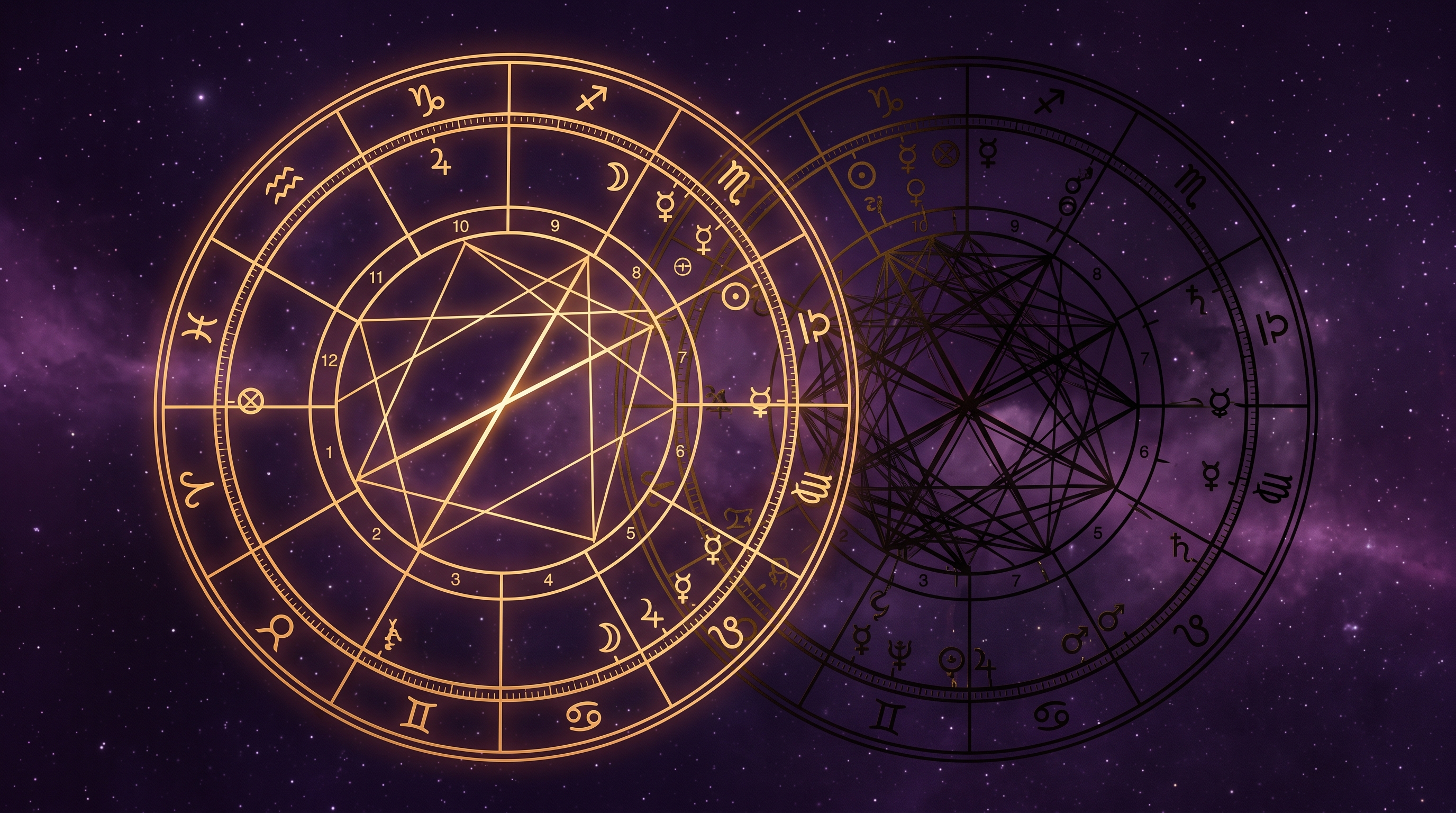
Place a friend's chart next to yours. Compare Moons, Venuses, and Mars placements. You are not judging compatibility; you are learning how two different charts communicate needs. This is one of the fastest ways to make interpretation practical.
Bringing the Chart Together
A birth chart becomes readable when you move in layers: planets, signs, houses, aspects, angles, and the chart ruler. Start with the big three. Add the ruler. Read by house before sign. Name the aspects in plain language. Look for repetition. Then let the chart speak as a whole.
If you want a structured place to apply this method, Try natal-chart and read your own placements in order. Start by reviewing your rising sign meaning, then move through the planets by house. The more charts you practice, the less you memorize and the more you notice.
Try It Yourself
Generate your full birth chart free — sun, moon, rising sign and all planet placements.
Try It Free →