INFP in Love: Why They Idealize, Then Pull Away
Tommy Sherma
9/29/2026
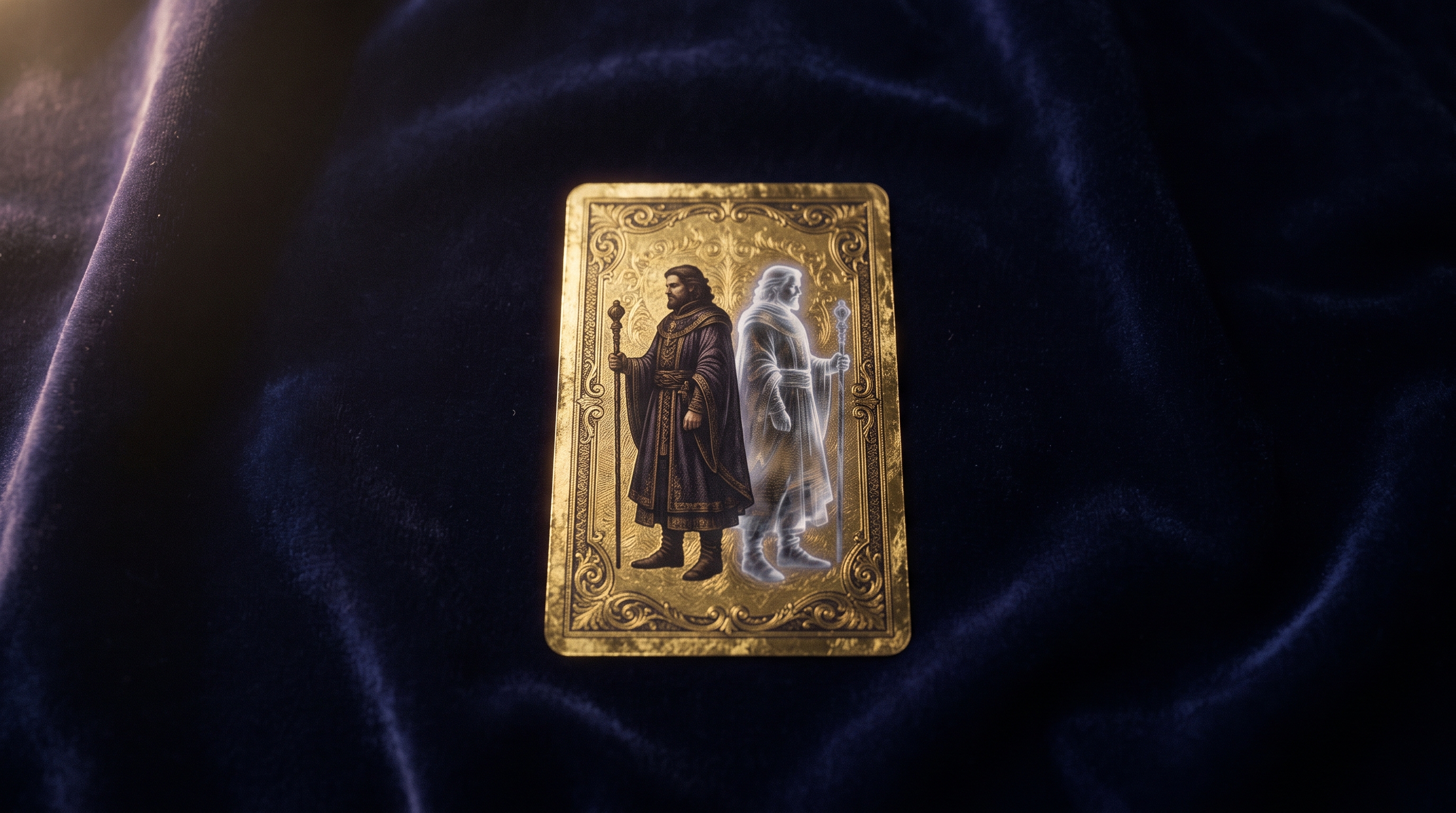
INFP in Love: Why They Idealize, Then Pull Away is the name for a two-phase loop inside the Myers-Briggs INFP type: the same person who builds an elaborate inner world around a new partner within weeks will later go quiet and pull back, and both moves come from the same source. Idealizing is not manipulation, and withdrawing is not rejection — they are two outputs of Introverted Feeling (Fi), a private values compass running an authenticity check that no partner is ever invited to watch.
Take Mira, a 29-year-old illustrator who lived the exact sequence twice in eighteen months: three weeks of euphoric late-night voice notes, a hand-drawn portrait of the guy's dog, a shared playlist named after a song they had heard once — and then a read receipt that never became a reply. She did not stop liking him. She stopped being able to hold the person she had built next to the person who actually texted back "lol."
INFP in Love: Why They Idealize, Then Pull Away — The Mechanism
The three-stage arc
Most INFPs do not experience this as a pattern at all. They experience it as three unrelated events that happen to end the same way.
- Stage 1 — Infatuation as research (weeks 1–6). Ne (Extraverted Intuition) floods the mind with possibility. Every new detail becomes a branch: what his childhood bedroom looked like, what she would be like at sixty, how the two of you would handle a sick parent.
- Stage 2 — Architecture (weeks 6–20). The possibilities get assembled into a coherent future. This is not idle daydreaming. The INFP is erecting a structure and checking it against Fi's core values: does this life feel morally clean, warm, and true?
- Stage 3 — The audited gap (month three onward). Real behavior arrives. It is usually fine — just smaller than the architecture. The INFP measures the gap privately, says nothing, and starts to feel like a fraud for being disappointed by someone who did nothing wrong.
Why Fi, not fear, drives it
Attachment anxiety and Fi get blamed interchangeably, and they are not the same thing. An anxiously attached person pulls away to test whether they will be chased. An INFP under Fi pressure pulls away because the distance between the imagined relationship and the real one creates a low-grade nausea they cannot articulate without sounding cruel.
So they say nothing, they get quieter, and the partner reads distance where the INFP feels something closer to grief. If you want the function-stack language before going further, the 16-type MBTI blueprint breaks down how Fi and Ne trade control in each type.

The Idealization Phase: Falling for Someone Who Does Not Exist Yet
Ne falls for the unfinished sentence
Ask an INFP what they love about a new partner and you will rarely hear a fact. You will hear a trajectory: "he's becoming," "she's about to figure it out." Ne is drawn to unfinished things, and a person is the most unfinished thing available.
The three qualities they over-value
- Unrealized potential. Talent that has not landed yet, kindness that has not been tested, a dream they talk about but have not started.
- An unhealed wound they imagine soothing. This is the dangerous one. INFPs are frequently recruited, without consenting to it, into becoming someone's rescue arc.
- Aesthetic resonance. A voice, a handwriting style, the way someone quotes a film — small sensory signals that Si files away as evidence of a soulmate.
The pedestal is self-authored, and it is not flattery
Here is the part partners rarely understand: the idealization is not really about them. It is a projection of the INFP's own unlived life. The imagined partner is brave in the ways the INFP is not, spontaneous where the INFP is cautious, unbothered where the INFP over-prepares. Dive deeper with the venus 5th house love dating.
That is also why the fall from the pedestal hurts so much. Nobody was knocked off it. The INFP was standing on it the whole time, holding up a mirror and calling it a person.
Why the Pull-Away Happens (It Is Not What You Think)
Overwhelm, not indifference
The withdrawal is usually a nervous-system event. A full day together, a group dinner with their family, a text that assumes plans — these register as demands on limited emotional bandwidth. The INFP does not need a break from you. They need a break from the version of themselves they are performing to keep up.
The authenticity audit
Fi's real job is integrity, and it eventually asks one brutal question: am I in this because I want this person, or because I want the feeling I had in week two? Until that question has an answer, contact feels like lying. So the messages get shorter, the plans get vaguer, and the INFP starts describing themselves, accurately, as "needing space."
The one-way relationship they cannot admit to
By month three or four, many INFPs realize they have been in two relationships at once: one with their own imagination, one with a real human being. That is exhausting, and admitting it feels shameful. The retreat is often a way of buying time to decide which one to end.
The rehearsal shows up at night — if you keep dreaming about a confrontation you never had, that is the same unresolved loop running on a different channel. A dream interpretation guide is a useful mirror for naming what the waking self refuses to say out loud.
This is the exact moment where the INFP in love idealizes, then pulls away — and it is almost never about a specific thing the partner did. For more on this, see the Venus 12th House Hidden.
Inside vs. Outside: The Same Six Months, Two Realities
This is the part that makes partners feel like they are losing their minds. Use the table as a translation layer rather than an excuse.
| Timeline | What the partner sees | What is happening inside the INFP |
|---|---|---|
| Week 1–3 | Intense curiosity, long messages, "you're different" | Ne is collecting data; every detail becomes a possible future |
| Week 4–8 | Warmth, invented nicknames, a shared playlist | The imagined future has hardened into something they already miss |
| Month 3 | Small irritations, questions about "where this is going" | The gap between the architecture and reality is now measurable |
| Month 4–5 | Shorter replies, cancelled plans, "I need a quiet week" | Fi is auditing motives; contact feels like lying by omission |
| Month 6 | Sudden distance or a soft breakup with no villain | The imagined partner has been grieved; the real one never got a vote |
Two conclusions follow. First, the withdrawal is almost never triggered by a fight — it is triggered by a private comparison. Second, the INFP's explanation will sound vague when it finally comes, because the reason is a feeling of incongruence rather than a list of grievances.
Mira described it plainly after her second round: "He did nothing wrong. I just could not stop noticing that my fantasy was kinder than my actual evenings." That sentence is the entire cycle compressed into one line.

INFP Love Compatibility: Who Weathers the Cycle Best
Cognitive-function pairing explains more here than star sign, though the two often rhyme. The types that do well with INFPs share one trait: they can tolerate ambiguity without taking it personally.
| Type | What they bring | The risk |
|---|---|---|
| ENFJ | Warm directness; asks the question the INFP is avoiding | Can over-manage the INFP's moods and accelerate the retreat |
| INFJ | Recognizes the inner architecture without needing it explained | Two withdrawers at once; long silences go unbroken |
| ENFP | Matches Ne's intensity and shares the enthusiasm | Idealizes right back; both partners fall for potential |
| ENTJ | Decisive, unbothered by emotional fog, keeps plans moving | Reads Fi's silence as a problem to solve rather than a state to allow |
| ESFJ | Consistent, expressive, makes the relationship legible | Fe pressure to "be normal" trips Fi's authenticity alarm |
If you would rather read love patterns through sun-sign pairings than through cognitive functions, the /angel-numbers maps which combinations tend to survive long silences and which ones escalate them.
What Partners Can Do When the Silence Starts
Use the 72-hour rule
Do not chase within the first 72 hours of a genuine withdrawal. Not because games work, but because the INFP is mid-audit, and every message during that window gets filed under "pressure" rather than "care." After three days, send one specific, low-stakes message: a photo of something that reminded you of them, with no question attached. Read more in the eight of cups reversed love.
Ask concrete questions instead of "what's wrong"
"What's wrong" demands an answer the INFP does not have yet. Better questions:
- "On a scale of 1–10, how crowded does your week feel right now?"
- "Is there something you have been not saying because you did not want to hurt me?"
- "Would a Tuesday with no plans help, or would you rather have plans?"
Concrete questions give Ne something to work with. Open-ended emotional prompts give it a cliff to fall off.
What reliably makes it worse
- Interpreting the silence as punishment and answering it with an ultimatum.
- Demanding a label for the relationship in the middle of the audit.
- Sending a long, emotionally articulate message that requires an equally articulate reply.
- Recruiting friends or family into the negotiation.
Reading the Pattern With Tarot, Dreams, and Honest Self-Awareness
INFPs tend to trust symbols more than spreadsheets, which is why symbolic tools work unusually well for this specific loop.
A three-card layout for the gap
Lay three cards face up: what I love about the real person, what I love about the imagined one, and what I am avoiding saying. Most INFPs find the third card the uncomfortable one, because it names the sentence they have been rehearsing in the shower for weeks. If you are new to the suits, the minor arcana card meanings explain why certain cards read as everyday friction instead of destiny.
Journal prompts that break the spell
- Write the partner's actual weekly behavior in plain verbs: "calls on Sundays," "forgets birthdays," "asks about my work."
- Write the fantasy in the same plain verbs. The gap becomes almost comically visible.
- Then write what you want from a partner with no face attached to it.
The self-discovery part nobody skips
INFPs do not usually outgrow this pattern; they learn to interrupt it. That requires knowing the difference between being in love and being in a project — and admitting that the pull-away is often the most honest moment in the entire relationship.

Breaking the Cycle Without Losing What Makes It Beautiful
Say the fantasy out loud, early
Not to the partner — to a friend, first. "I have already imagined our apartment" is a sentence that loses its power the second it leaves your mouth. Secrecy is the only thing keeping the architecture standing, and secrecy is a choice you can stop making.
Swap the fantasy question for a curiosity question
Instead of "could this become the life I want," ask "what is this person like on a bad Tuesday?" The first question produces feelings. The second produces data.
Let the partner see the audit
Most INFPs withdraw to protect the other person from an explanation they fear will sound contemptuous. Say the softer truth instead: "I have been comparing you to someone I invented, and that is not fair to you." It sounds impossible to say out loud. It usually lands as relief.
Give the real person a deadline
Two to three months is enough time to decide whether you want the actual relationship rather than the potential one. If the answer is no, end it cleanly and quickly. INFPs are famous for slow exits that keep everyone inside a fantasy a little longer. A love compatibility tool will not decide for you, but comparing your stated core needs against your actual behavior with this person surfaces the mismatch faster than another month of quiet.
The cycle breaks the moment the INFP stops treating withdrawal as a confession of failure and starts treating it as information. If you want to identify which specific Fi-Ne pattern you are running and how it shapes the way you attach, Try MBTI and compare the result against relationships you have actually had rather than the ones you have only imagined.