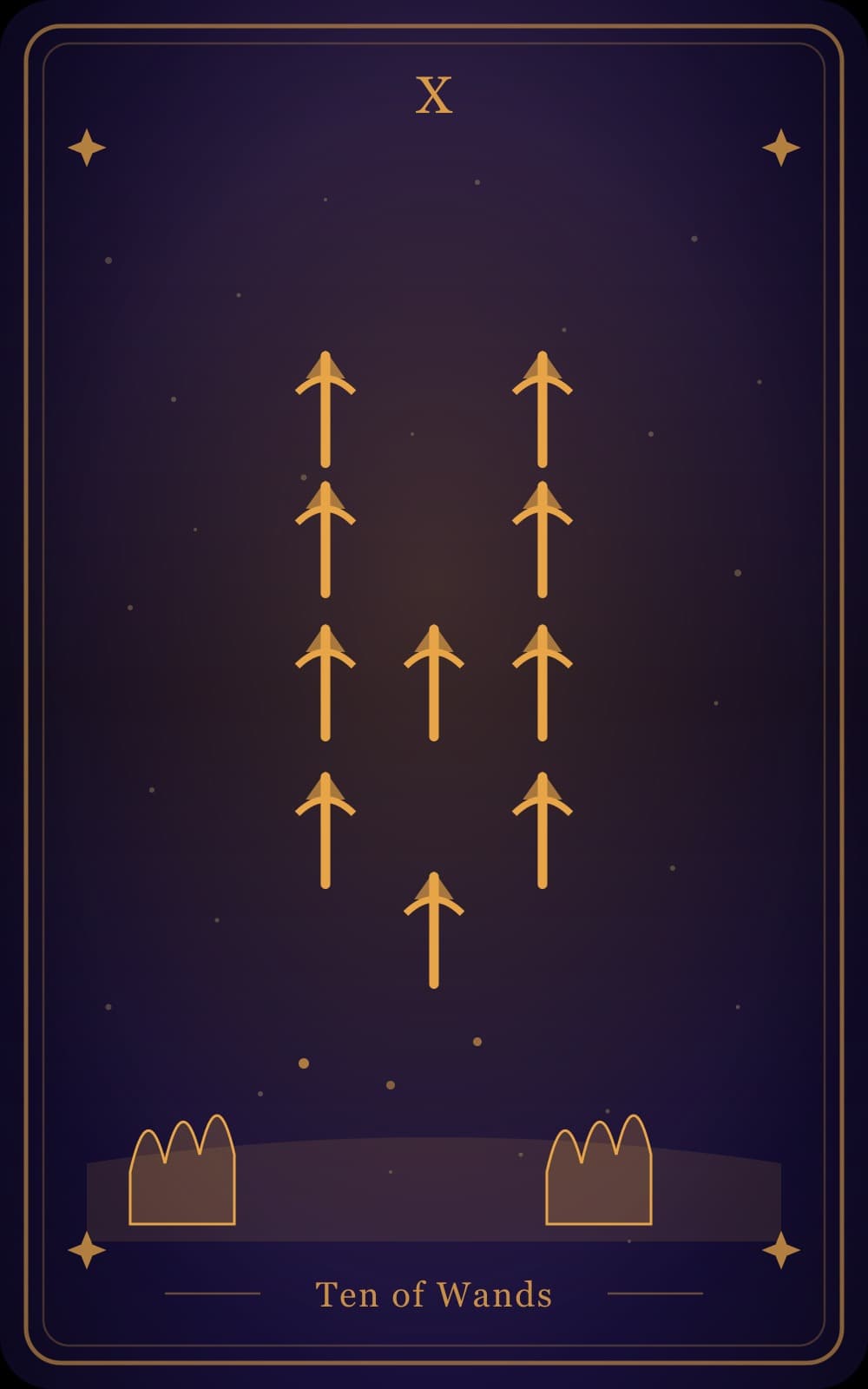
Ten of Wands Tarot Card Meaning: Upright, Reversed & More
Discover the Ten of Wands tarot card meaning. Learn about its upright and reversed interpretations, love and career insights, and how it pairs with other cards.
9/14/2026
Ten of Wands Keywords and Core Meaning
The Ten of Wands is the final card in the Wands suit, representing culmination, responsibility, and the weight of success. Keywords include burden, hard work, exhaustion, and nearing the end of a challenging journey. This card often appears when you're carrying too much—whether obligations, projects, or emotional loads—and it signals that you're close to completion but must manage your energy wisely.
Symbolism and Esoteric Associations
In traditional Rider-Waite imagery, a figure bends under the weight of ten heavy wands, walking toward a distant town. The wands obscure their view, symbolizing how burdens can blind us to the bigger picture. The town represents a goal or community, suggesting that the load is being carried for a purpose. Esoterically, the Ten of Wands corresponds to the number 10—a return to unity after a cycle—and is linked to Saturn in Sagittarius, a combination of discipline and expansive vision that can feel restrictive when overextended. The element of fire (Wands) here is smothered, turning passion into drudgery.
Upright Meaning
Upright, the Ten of Wands speaks of taking on too much. You may be in a position where you're the one everyone relies on, but the cost is burnout. This card acknowledges your hard work and dedication, yet warns that you're nearing your limit. It often appears when a project is almost done—you can see the finish line, but the final stretch feels unbearable. The message is to delegate, prioritize, and release what isn't yours to carry. Success is within reach, but not at the expense of your well-being.
Reversed Meaning
When reversed, the Ten of Wands indicates either a release of burdens or an inability to let go. You might finally be delegating tasks, setting boundaries, or walking away from an overwhelming situation. Alternatively, it can signal resistance to change—clinging to responsibilities out of fear or pride, leading to deeper exhaustion. In some cases, it suggests that you're sabotaging yourself by refusing help. The reversed card asks you to examine whether you're truly ready to put down the load or if you're trapped in martyrdom.
Love and Relationships
In love, the Ten of Wands often points to a relationship that feels like work. One partner may be carrying the emotional weight for both, leading to resentment. It can also indicate external pressures—family, finances, or career—that strain the bond. If you're single, this card may suggest you're too burdened by past relationships or personal responsibilities to make room for love. The remedy is honest communication and a fair redistribution of effort. If the relationship is worth it, both parties must share the load.
Career and Money
Professionally, the Ten of Wands is a classic burnout card. You may be juggling multiple projects, working overtime, or feeling solely responsible for your team's success. While your commitment is admirable, it's unsustainable. Financially, it can indicate that you're working hard but seeing little reward, or that debt and expenses are piling up. The card advises restructuring your workload, asking for help, and reassessing whether your efforts align with your long-term goals. Sometimes, the best move is to finish what you started and then step back.
Health and Personal Growth
Health-wise, the Ten of Wands warns of stress-related issues: fatigue, insomnia, muscle tension, and anxiety. Your body is asking you to slow down. On a personal growth level, this card teaches the lesson of limits. True strength isn't about carrying everything alone; it's about knowing when to rest and when to ask for support. By releasing unnecessary burdens, you create space for renewal and reconnect with the passionate fire of the Wands suit.
How the Ten of Wands Interacts with Other Cards
The Ten of Wands amplifies the meaning of surrounding cards. With the Tower, it can signal a breaking point or collapse under pressure. Paired with the Eight of Cups, it suggests walking away from a draining situation. Next to the Nine of Wands, it highlights resilience but also the risk of paranoia. With the Star, it offers hope that relief is coming. In tarot spreads, its position matters: as an outcome, it may indicate that success requires sustained effort; as advice, it urges you to lighten your load.
Closing Note
The Ten of Wands is a reminder that you are not meant to carry the world on your shoulders. Recognize your accomplishments, but also honor your need for rest. If this card resonates with you, consider exploring the free tarot reading tools on Sortiax. Our AI-powered readings, natal chart insights, and daily horoscopes can help you gain clarity and find balance in your journey.