Astrology Transits Explained: How Current Planetary Movements Affect Your Natal Chart
Tommy Sherma
9/21/2026
Astrology transits are a moving planet making contact with a specific degree in your natal chart, not a one-size-fits-all forecast. That's why two people under the same sky can have entirely different weeks. Most guides offer planet keywords without connecting them to your own chart, so you're left guessing. Start by learning how to read a birth chart, then transits have something concrete to touch.
Astrology Transits Explained: A Moving Clock Against a Fixed Chart
A birth chart is a still frame. It holds the zodiac degree of every planet at your first breath, plus the Ascendant and Midheaven — the two angles that set your house layout. Transits are simply where those same planets sit now. Nothing happens until a current planet arrives within a few degrees of a frozen one. That arrival is the transit, and every phrase you've read about "Saturn returning" or "Venus crossing your seventh house" is a description of contact, not of the sky in general.
This is the part most explanations skip: the sky is identical for everyone alive, but the contact points are personal. Jupiter is generous in the abstract; it is only generous to you if Jupiter is touching a natal planet that can receive it. A natal chart with no sensitivity in the money houses won't suddenly produce a windfall just because Jupiter is transiting a money sign.
Contact Happens by Degree, Not by Sign
Two people with Venus in the same sign can have opposite Venus transit experiences. If your Venus sits at the opening degrees of the sign and your friend's Venus sits at the closing degrees, the same transiting planet will reach you months or years apart — for slow movers, it's often years. Sign-level astrology smooths over this gap. Degree-level astrology is where readings start being accurate instead of vaguely pleasant.
The same logic explains orbs. A transit doesn't switch on at the exact degree; it becomes noticeable as the planet closes within a few degrees and fades as it moves away. Two astrologers can disagree about whether a transit is "active" purely because they use different orb sizes. What matters for you is consistency: pick an orb, apply it to every transit, and your readings become comparable instead of arbitrary.
The Five Contacts Worth Knowing
| Contact | Geometry | What it feels like | What it's for |
|---|---|---|---|
| Conjunction | Same degree | Merged, loud, hard to see objectively | Starting something |
| Square | A quarter circle apart | Friction, deadlines, resistance | Fixing and restructuring |
| Opposition | Directly across the chart | Mirrored to you through other people | Negotiating, rebalancing |
| Trine | A third of the circle apart | Flow so easy you may not notice it | Building quietly |
| Sextile | A sixth of the circle apart | An opening that needs a small push | Making the first move |
Roughly half the confusion in transit reading comes from treating all five as equally difficult. A conjunction and a trine can involve the same two planets and produce completely different months.
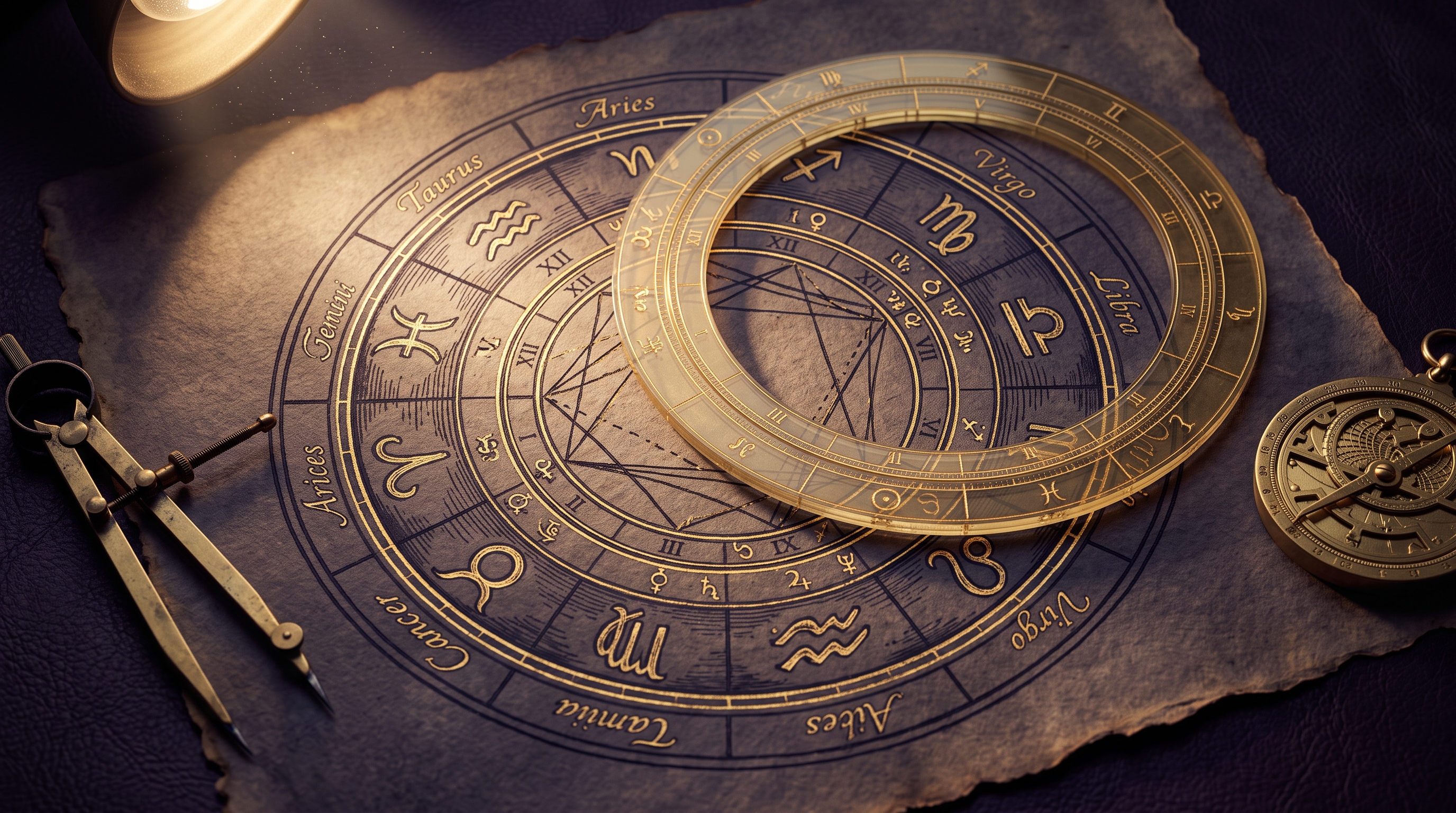
Which Transits Hit Hardest: Fast Moods, Slow Rewrites
The most useful filter in transit interpretation is duration. A Moon transit crosses a natal degree in hours. Pluto takes years. Both are technically transits, but treating them as one category is like calling a thunderstorm and an ice age the same weather.
| Transiting planet | Time over one natal degree | Felt as | Practical response |
|---|---|---|---|
| Moon | Hours | A passing mood, a one-day sensitivity | Notice it; don't decide from it |
| Sun, Mercury, Venus | Days to a couple of weeks | A short theme, a conversation, a small opening | Act while the window is open |
| Mars | A few weeks | Irritation, urgency, momentum or conflict | Move on something; expect friction |
| Jupiter | Weeks to months | Expansion, optimism, opportunity | Say yes to growth, not to excess |
| Saturn | Months to a couple of years | Pressure, limits, delayed reward | Restructure; cut what's hollow |
| Uranus, Neptune, Pluto | Years | Identity-level rewrites in stages | Work with the change |
Duration Beats Drama
A Mars square feels louder than a Saturn conjunction. The Mars week is annoying and forgotten; the Saturn contact is what actually reshapes your work life. When readers tell me a transit "did nothing," the answer is usually that they were watching the loud one and ignoring the long one. Loud transits produce incidents. Long transits produce outcomes.
Stacking Matters More Than Any Single Contact
One fast transit rarely explains a rough month on its own. Three fast contacts hitting the same natal degree in sequence — Mars first, then the Sun, then a New Moon landing there — behaves like a single slow transit on a compressed clock. Before you blame a transit, count how many planets are currently near that degree. Density, not drama, is the better predictor of how a period will actually land.
How to Read Transits in Your Birth Chart: A Five-Step Method
You don't need an ephemeris memorized. You need a list of degrees and a simple filter.
- Write down your natal degrees. Note the exact degree of your Sun, Moon, Ascendant, Midheaven, and chart ruler. Those five points describe most of what you'll actually feel. Understanding which houses they govern matters as much as the degrees themselves, because the house tells you which area of life the transit will disturb.
- Mark the hot spots. Angles and luminaries respond fastest and loudest. A transit to your Ascendant changes how you're perceived; a transit to your Midheaven changes what you're known for.
- Find today's positions. Any chart calculator does this instantly. Compare current degrees against your natal list.
- Match by aspect and allow an orb. A contact usually registers a couple of degrees before it's exact and lingers a couple of degrees after. If you only check the exact date, you miss the build-up, which is where most of the feeling lives.
- Turn the pair into one sentence. This is where keyword lists fail and real interpretation begins.
The Sentence Formula That Beats Keyword Lists
Read every transit as: [transiting planet's agenda] is asking [natal point's territory] to [verb].
- Saturn pressing your natal Moon: feelings need structure, not more comfort.
- Jupiter touching natal Venus: generosity flows toward what you already value.
- Uranus on your Ascendant: how you show up is being rewritten, whether you approve of the draft or not.
- Mars square natal Mercury: your words move faster than your judgment.
Notice that none of those sentences name a specific event. That's deliberate. A transit describes pressure and timing, not a script. What you do inside the window is the variable, and it's the only part you control.
Sun Sign, Moon Sign, Rising Sign: Who Feels the Transit and How
The same transit lands in a different life area for every person, because houses are counted from your rising sign. This is why a sun sign column can be broadly right and personally useless at the same time.
The Rising Sign Sets the Arena
Your Ascendant fixes the house layout of the entire chart. A Jupiter transit might expand your income for one person, your studies for another, and your closest relationship for a third — same planet, same aspect, different arena. Before asking what a transit means, establish which house it's crossing. Delivery timing shifts too: someone with a late-degree rising sign will feel a Jupiter transit weeks after it peaks for a friend with an early-degree rising sign.
The Sun Sign Is a Rough Forecast, and That's Fine
Popular daily horoscope forecasts work by assuming the Sun's house position from your star sign. That's a genuine shortcut, not a scam: the Sun rules your core direction, so Sun-based predictions catch the general tone of a period. They just can't tell you whether the pressure is landing on money, health, or a sibling.
Read the Transit Through Your Moon Before You React
Emotional weather is the Moon's department. If a transit feels disproportionate — a small event producing a large reaction — check whether it's touching your natal Moon before drawing conclusions about the situation itself. Situations that look like crises are often just sensitivity without a corresponding event.
Transit Timing Windows: Build-Up, Exact Hit, and Aftermath
A transit is not a single date. It's a window with three distinct phases, and each asks something different from you.
| Phase | What's happening | Best move |
|---|---|---|
| Build-up | The theme arrives as restlessness, anticipation, or a hint of the problem | Gather information; don't force a decision |
| Exact hit | The pressure peaks; the issue becomes undeniable | Act, decide, or confront |
| Separation | The theme settles into your life as a new normal | Integrate; notice what permanently changed |
The Build-Up Is Where the Feeling Lives
Most people notice a transit before it's exact and assume they've missed it. The opposite is true: the approach is when information is clearest, because nothing has been decided yet. By the time the contact is exact, the choice is often already made for you — by a deadline, a conversation, or a resource running out.
Retrograde Repeats: The Same Lesson, Three Times
When a slow planet turns retrograde over a natal degree, it can make the same contact more than once. The first pass is a preview: something surfaces. The second pass, with the planet moving backward, is the confrontation, where the issue refuses to stay avoided. The final pass is the settlement — you handle it differently than you did the first time, and the transit closes. If a theme seems to repeat, check whether the planet is retrograding rather than assuming the universe is stuck.

Common Misreadings of Astrology Transits
Most bad transit reading comes from a handful of habits.
- Blaming one transit for a whole month. Check what else is active before assigning a cause.
- Treating a slow transit as a personality trait. A Pluto contact is a phase, not a permanent identity.
- Ignoring natal capacity. A transit can only activate what your chart can hold. A so-called money transit won't produce money if nothing in your chart speaks to earning.
- Assuming easy transits do the work. Trines and sextiles are opportunities, not outcomes. People routinely sleep through their best windows of the year.
- Reading a mood as a verdict. A heavy feeling is often just the Moon. Before rewriting your life plan, verify whether the trigger is a fast body that will pass by tomorrow. If you're unsure where your emotional baseline sits, checking your moon sign clarifies which reactions are yours and which are borrowed from the sky.
The common thread: transits describe conditions, not commands. They tell you when the door is open or the ground is moving, never what you're obliged to do about it.
Putting Transits to Work in Love, Work, and Daily Practice
Relationships and Synastry
Transits don't only touch your own chart — they touch the space between two charts. When a transiting planet lands on a sensitive degree in your partner's chart, the pressure shows up in the relationship even if it's technically "your" transit. This is where relationship compatibility reading becomes practical: it shows which degrees in each chart are live right now, so you can tell a real relationship problem from a temporary squeeze.
Career and Big Decisions
The most reliable use of transits is scheduling. If a Saturn contact is tightening over your Midheaven, don't launch something fragile in that window — finish, audit, consolidate. If a Jupiter contact is opening your sixth house, take on the extra project. Timing decisions this way doesn't remove difficulty; it stops you from fighting the current.
A Weekly Practice That Takes Minutes
Pick a fixed day each week and write down three things: which transits are within orb of your natal planets, which life area each one touches, and one action that fits the pressure instead of resisting it. Over a few months you'll build your own record of how you personally respond — worth more than any generic transit guide, including this one.
Transits aren't a forecast of events handed down from the planets. They're a schedule of pressure points, and the reading is only as good as the decisions you make inside them. If you want your exact degrees, houses, and angles as raw material, Try natal-chart and start reading your own timing instead of borrowing someone else's.
Try It Yourself
Generate your full birth chart free — sun, moon, rising sign and all planet placements.
Try It Free →